
Ammoselinum popei
Ammoselinum popei
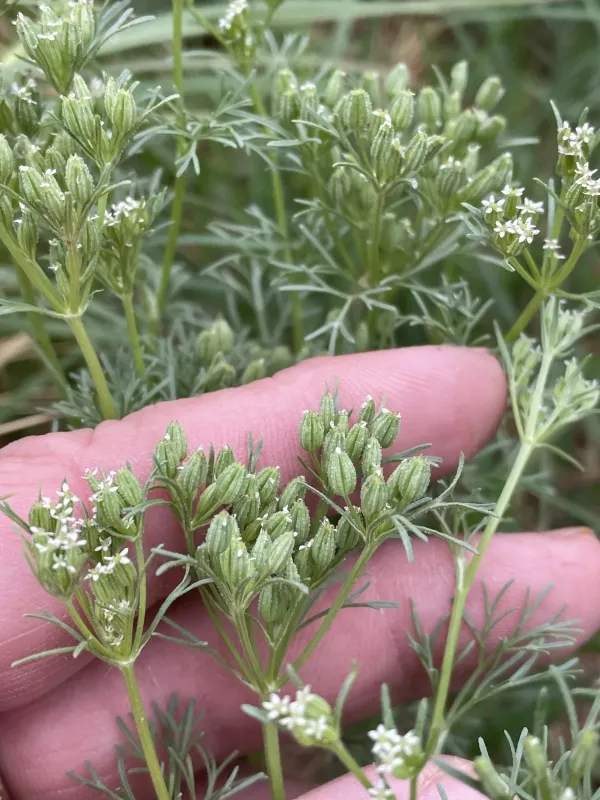
Description
Sowing dates
Ammoselinum popei is an annual herbaceous plant belonging to the Apiaceae family. In natural habitats, the plant's life cycle begins with seed germination during cool periods, requiring specific temperature conditions to initiate growth.
The optimal sowing time occurs in early spring, as soon as the soil warms up to the minimum required threshold. Early planting allows the crop to effectively utilize moisture reserves accumulated in the soil throughout the winter months.
The seeds have a relatively low germination rate if sowing depth is not maintained, so it is recommended to plant them at a depth of no more than 1–2 centimeters. Surface sowing often leads to embryo desiccation, significantly reducing the density of the crop stands.
In commercial conditions, pre-treated or stratified seeds are often used to improve germination uniformity. This practice synchronizes plant growth and development, which is critical for future maintenance and efficient mechanized harvesting.
In regions with hot and arid climates, sowing is typically performed in the autumn. This allows the seeds to undergo natural preparation for germination, promoting earlier root system development and the establishment of a robust leaf rosette before the onset of extreme heat.
Growing requirements
The crop has moderate soil fertility requirements, preferring light, sandy, or loamy substrates with excellent drainage. High water tables are generally detrimental to the root system of this species, leading to root rot and stunted development.
Ammoselinum popei is well-adapted to semi-arid environments where precipitation is often limited. Despite its inherent drought tolerance, the plant demonstrates significantly better vegetative mass production when provided with sufficient light exposure.
Soil pH should remain within a neutral range. Excessive acidity or alkalinity inhibits vital metabolic processes within the plant cells, leading to a noticeable decrease in overall productivity during the active growing season.
Agronomic practices prioritize minimal soil disturbance to preserve soil structure and prevent erosion. The crop is extremely sensitive to topsoil compaction, which hinders the natural development of its primary taproot.
A fertilization strategy should focus on moderate nitrogen applications during the phase of intense leaf growth. Excessive nutrient levels may promote foliage over-development at the expense of seed quality, especially when the crop is cultivated for seed production purposes.
Main diseases and pests
The primary threats to this crop include fungal diseases that thrive during periods of high atmospheric humidity. Powdery mildew can impact the leaf apparatus, significantly reducing the rate of photosynthesis and overall plant health.
Among the pests, sucking insects such as aphids are particularly dangerous, as they act as vectors for viral diseases. Aphid infestation can lead to leaf deformation and the gradual wilting of the entire plant.
Root rot poses a serious risk during periods of waterlogging or poor drainage. The proliferation of pathogenic microorganisms in the rhizosphere leads to premature root system degradation and a sharp decrease in yield across the field.
Various species of plant bugs may damage young inflorescences, which critically impacts the final seed yield. Regular crop scouting is essential to identify infestations early and apply appropriate integrated pest management measures.
- Implementing strict crop rotation to reduce fungal infection risks.
- Selecting seeds resistant to localized pathogens and environmental stressors.
- Monitoring soil moisture levels consistently to prevent root decay.