
Ammoselinum butleri
Ammoselinum butleri
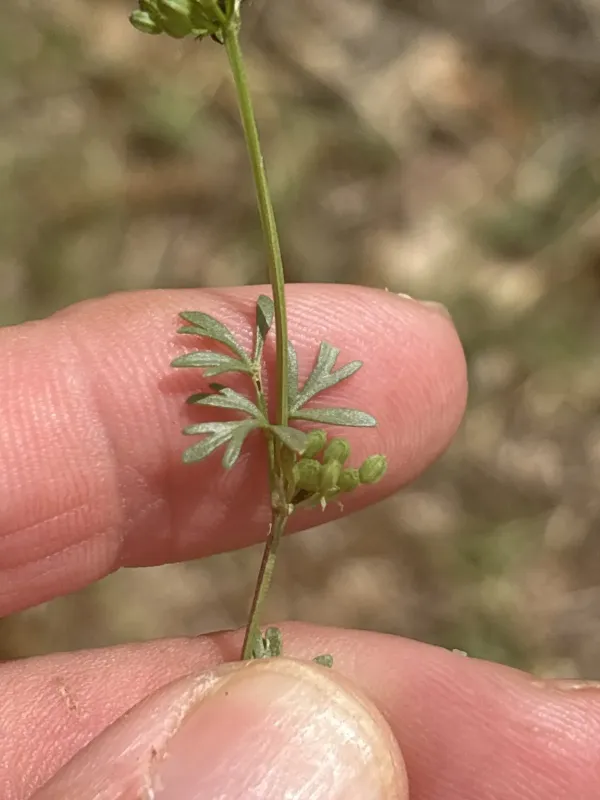
Description
Sowing dates
Ammoselinum butleri is classified as an ephemeral plant, whose life cycle is strictly tied to spring soil moisture. Seeds of this plant germinate in the late autumn or early spring when favorable temperature conditions are met.
A biological feature of the species is a very short vegetation period, allowing the plant to complete its development cycle before the onset of summer drought. In agricultural experiments, sowing is recommended directly into prepared soil immediately after harvesting the seeds.
Since the crop is a natural component of prairies, artificial stratification of seeds often promotes more uniform emergence under cultivation conditions. The sowing depth should be minimal, as the seeds have low germination energy when buried too deep.
The optimal sowing time in conditions similar to the natural habitat is late autumn, which mimics the natural seed dispersal cycle. Spring sowing is less effective due to the rapid loss of seed viability during storage.
An important success factor is the absence of competition from weeds, as in the early growth stages, Ammoselinum butleri seedlings are characterized by extremely slow development and low competitiveness.
Growing requirements
The plant belongs to the Apiaceae (parsley) family and is a typical inhabitant of dry open spaces. It has high requirements for soil drainage and cannot tolerate waterlogging in the root zone under any circumstances.
It prefers sandy or loamy sand soil types with low humus content, which are typical of its natural growth sites in the southern United States. The optimal pH level should be close to neutral or slightly alkaline.
The crop is light-loving and does not tolerate even partial shading, which is critical when choosing a site for cultivation. An excess of nutrients, especially nitrogen fertilizers, negatively affects root system development and the overall health of the plant.
For normal development, Ammoselinum butleri requires a moderate temperature regime during the period of active growth. High summer temperatures provoke a premature transition to the flowering phase and subsequent wilting.
In its natural habitat, the plant is adapted to periodic drying of the upper soil layer, so artificial irrigation must be strictly regulated to avoid the development of root rots.
Main diseases and pests
Due to its specific range and short vegetation period, Ammoselinum butleri is rarely subjected to massive pest infestations. The main threat is posed by soil pathogens that become active during periods of excessive moisture.
Infection by specific aphid species is possible, which can act as vectors for viral diseases, causing deformation of leaves and umbels. Prevention involves maintaining optimal sowing density to ensure proper air circulation.
Under conditions of high air humidity, plants may be affected by powdery mildew, leading to premature chlorosis. The use of fungicides on this species is not well-studied, so preference is given to agro-technical protection methods.
Nematodes can damage the root system in light sandy soils, leading to stunted growth of the entire plant. Monitoring the condition of the root collar is a mandatory step in assessing the health of the crop.
A critical survival factor is also competition with invasive weeds, which are capable of completely displacing low-growing populations of Ammoselinum butleri during the first weeks of growth.
Harvesting
Harvesting Ammoselinum butleri seeds requires high precision, as the fruits tend to shatter immediately after reaching physiological maturity. Harvesting should be performed during morning hours while air humidity is still high.
An indicator of readiness for harvest is the darkening of the umbels and the change in seed color from green to light brown. A delay in harvesting even by a few days can result in the loss of up to 70% of the seed crop.
The cut inflorescences must be post-ripened in ventilated areas, spread out in a thin layer on paper or cloth. Once dry, the seeds easily detach from the umbels with gentle mechanical impact.
Seed cleaning from plant debris is carried out using sieves with appropriate mesh sizes. A high degree of contamination in the seed lot can reduce germination rates during storage.
Harvested material should be stored in paper bags in a dry, cool place, avoiding airtight containers. Optimal storage conditions allow the maintenance of seed viability until the next planting season.