
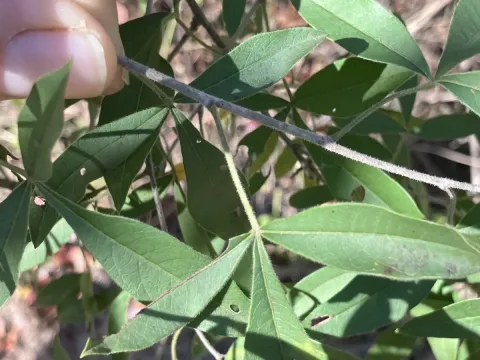
Transvaal sumac
Rhus transvaalensis
Transvaal sumac (Rhus transvaalensis) is a perennial woody plant belonging to the Anacardiaceae family. It is native to the dry savannah and woodland regions of Southern Africa.
What the section contains
Transvaal sumac
The plant thrives in well-draining, sandy, or rocky soils, demonstrating remarkable resilience to the nutrient-poor substrates typically found in its natural habitat.
Light intensity is a critical factor for the healthy development of this species. It requires full sun exposure to maintain its characteristic growth habit and dense foliage density.
Regarding climate, the Transvaal sumac is strictly adapted to subtropical conditions and is sensitive to frost. It cannot survive in cold climates unless provided with a controlled environment such as a conservatory.
Agricultural practices focus on mimicking its natural drought-resilient environment. Irrigation should be managed carefully to ensure the soil dries out between waterings to prevent root system stress.
The primary economic use of the Transvaal sumac is within the nursery trade and landscape design, where it is valued for its unique architectural form and drought tolerance.
The wood of this species is dense and durable, yet its harvesting for timber is negligible due to the plant's relatively slow growth rate and ornamental status.
In various regions, the plant is studied for its chemical composition, specifically the presence of tannins and secondary metabolites that have potential for niche botanical applications.
Propagation is generally managed through seed collection at the end of the reproductive cycle or through cutting propagation, which is preferred for maintaining genetic consistency.
Pruning is carried out periodically to remove dead or diseased branches, ensuring the plant remains healthy and aesthetic throughout its long lifespan.
Excessive soil moisture is the primary threat to the health of the Transvaal sumac, frequently leading to root rot and fungal infections that can be fatal to the plant.
Foliar diseases, including powdery mildew, can occur in environments where air circulation is restricted or humidity remains high for extended periods.
Pest pressures often involve sucking insects such as aphids or scale insects, which target the tender new growth and weaken the plant's vigor.
Integrated pest management (IPM) strategies, including the use of neem oil or targeted biological controls, are highly recommended to keep infestations at manageable levels.
Maintaining proper spacing between shrubs is essential to facilitate airflow, which effectively reduces the risk of fungal outbreaks in denser plantings.