
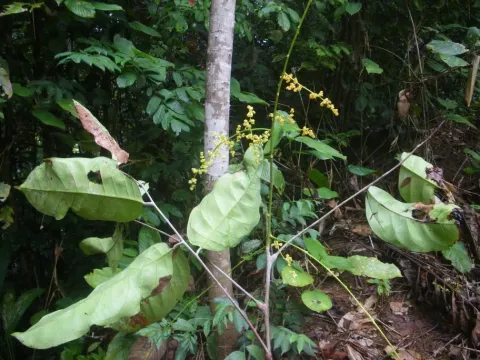
Trichoscypha
Trichoscypha
Trichoscypha is a genus of evergreen trees and shrubs belonging to the Anacardiaceae family. Native to the rainforests of Western and Central Africa, these plants thrive in humid tropical environments characterized by high rainfall and consistent temperatures throughout the year.
What the section contains

Trichoscypha
The climate requirements for Trichoscypha are strictly tropical. They demand an environment free from frost and cold snaps, as the species has evolved to grow in stable equatorial conditions where temperature fluctuations are minimal.
Soil quality is paramount for the health of these trees. They require fertile, humus-rich soil that is well-draining but capable of retaining sufficient moisture. Waterlogging must be avoided to prevent the development of root rot, which is a common threat in poorly drained tropical soils.
Light intensity plays a significant role in the plant's life cycle. As a component of the tropical forest understory, young Trichoscypha plants benefit from partial shade, while mature specimens require access to filtered sunlight to support their metabolic processes and flowering.
Agronomic management relies on mimicking the natural forest floor conditions. Regular monitoring for moisture content and nutrient availability in the soil is essential, as these plants have not been significantly domesticated for high-input, industrial-scale agricultural production.
The primary economic use of Trichoscypha is its edible fruit, which is highly appreciated by local communities. The fruits are typically gathered manually, requiring careful handling due to their soft skin and vulnerability to bruising and rapid spoilage post-harvest.
Harvest timing is determined by visual inspection of the fruit's ripeness and aromatic changes. Due to their limited shelf life, the fruits are rarely exported, being primarily sold in local markets soon after being picked from the trees.
Apart from the fruit, some species of Trichoscypha are valued for their wood, which is utilized in local woodworking and crafts. The tree's overall contribution to the ecosystem and local subsistence agriculture makes it a species of cultural and nutritional significance.
Crop yields are largely dictated by environmental variables, including the timing of rainy seasons and the presence of local pollinators. Variability in weather patterns can significantly impact the annual harvest volume, making production somewhat unpredictable.
Future potential for Trichoscypha lies in sustainable harvesting and a better understanding of its ecological requirements. As interest in non-traditional and exotic fruits grows, there may be increased research into optimizing its cultivation for broader agricultural applications.