
Umbu
Spondias tuberosa
Description
Growing requirements
Umbu (Spondias tuberosa) belongs to the Anacardiaceae family. This tree is native to the semi-arid regions of northeastern Brazil, specifically adapted to the harsh conditions of the Caatinga biome.
The culture is a deciduous tree reaching 4 to 7 meters in height. Its main botanical feature is the presence of tuberous root thickenings that serve as water reservoirs, enabling the plant to survive prolonged periods of drought.
Successful cultivation of Umbu requires well-drained sandy or sandy-loam soils. The plant is extremely sensitive to waterlogging, meaning the soil must provide excellent aeration for the root system.
Optimal climatic conditions for the crop include high year-round temperatures and a distinct dry season. The tree can endure long periods without rainfall by entering a dormant state and shedding its leaves.
In terms of agrotechnics, Umbu is valued for its low fertility requirements, though moderate organic fertilization during the early vegetative phase is recommended to ensure robust commercial yields.
Yield
The primary economic use of Umbu is for its fruit, which is consumed fresh or processed into juices, jams, jellies, and liqueurs.
Umbu fruits are noted for their high content of Vitamin C, organic acids, and sugars, making them a vital nutritional source for local communities and a sought-after raw material for the food industry.
Productivity of a mature tree depends heavily on environmental conditions and annual rainfall, typically ranging from 20 to 50 kilograms of fruit per tree with proper management.
Breeding programs are currently focused on selecting varieties with larger fruits, smaller seeds, and a balanced sugar-to-acid ratio.
Commercial orchards require wide spacing, as mature trees develop a broad, sprawling canopy that needs significant space for optimal development and harvest accessibility.
Main diseases and pests
Common diseases affecting Umbu include fungal infections of the fruits, which occur primarily during periods of abnormally high humidity at the time of ripening, leading to premature fruit drop and rot.
The main pests of the crop include various insects that attack young foliage and inflorescences, which can significantly reduce the overall fruit set.
Integrated pest management (IPM) practices are used in commercial orchards to minimize the use of harsh synthetic pesticides and preserve the ecological quality of the fruits.
Young saplings may be damaged by rodents, requiring strict monitoring of the base area and protection for the trunks during the initial years of development.
Crucial prophylactic measures include maintaining orchard sanitation, performing timely pruning of damaged branches, and removing mummified fruits where pathogens might overwinter.
Harvesting
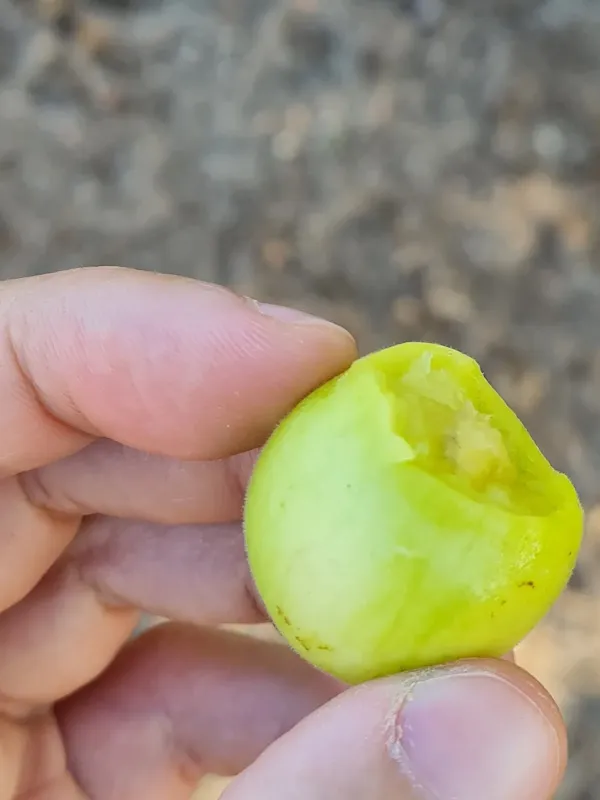
The harvest season for Umbu begins when the fruits reach biological maturity, signaled by a yellowish-green skin color and a distinct, pleasant aroma.
Because the fruits have a delicate skin, hand-picking is the only viable method to minimize mechanical damage that would otherwise lead to rapid post-harvest spoilage.
Fruits require immediate distribution or processing, as their shelf life at room temperature is limited to only a few days due to high tissue respiration rates.
Transport must be handled in ventilated containers that prevent heavy stacking or pressure on the fruit layers, effectively preventing deformation.
To extend the commercial season, a portion of the harvest is often processed via flash-freezing the pulp, enabling year-round use in food manufacturing.