
Punjab sumac
Rhus punjabensis
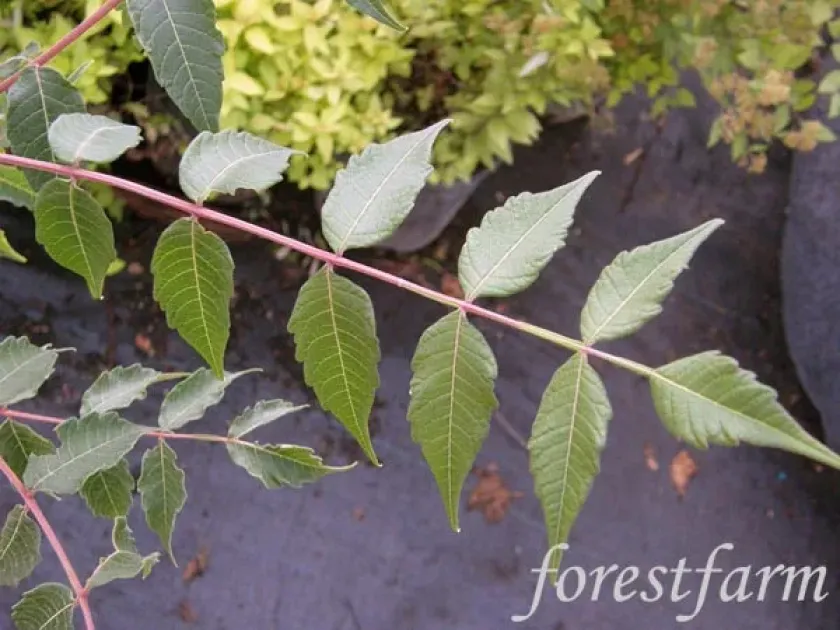
Description
Growing requirements
Punjab sumac (Rhus punjabensis) is a deciduous tree or large shrub belonging to the Anacardiaceae family. This plant originates from the Himalayan foothills, with a natural range extending from the Punjab region through northern India, Pakistan, and China.
The crop prefers a moderately warm climate and well-drained, rocky, or sandy soils. Once established, the plant shows high tolerance to drought, but it performs poorly in waterlogged conditions or heavy clay soils.
In its native environment, Punjab sumac is found at altitudes up to 2000–2500 meters above sea level, which indicates its capability to withstand significant temperature fluctuations and moderate frosts.
For successful cultivation, the plant requires an open, sunny location protected from strong winds. It is extremely photophilous; shading leads to a sparse crown and significantly reduces biomass production and fruit yields.
Agrotechnical practices include regular sanitary pruning to maintain the crown's shape. Propagation is usually achieved through seeds or root suckers, as cuttings of sumac are difficult due to the specific composition of the plant's milky sap.
Main diseases and pests
Punjab sumac is considered a relatively resilient crop; however, it is susceptible to fungal infections in overly moist soil, which can lead to root system decay.
Among insect pests, various species of psyllids and aphids pose the greatest threat, as they can colonize young shoots and lower the tree's overall vigor.
Leaf spot diseases, caused by pathogenic fungi during prolonged rainy periods, are common for this plant family. Fungicides with a broad spectrum of activity are used at the beginning of the growing season to control these outbreaks.
Damage to the bark during mechanical soil cultivation must be avoided, as wounds serve as entry points for infections, including dangerous bacterial necroses.
An effective preventive measure is maintaining proper planting density to ensure good crown ventilation, which hinders the spread of pathogens within the dense branches.
Harvesting
The economic use of Punjab sumac focuses on the harvest of its fruits and bark. The fruits are small drupes covered in fine hairs, which are used as a spice (after drying and grinding) or as a source of organic acids.
The bark and leaves contain a high percentage of tannins, making them historically valuable in the leather industry for tanning processes. This makes the crop a useful technical resource for regional production.
In medicine, parts of the plant are utilized for their anti-inflammatory and astringent properties. Phytochemical compounds extracted from various parts of the plant are of particular importance, finding applications in both traditional and modern pharmacology.
Fruit harvesting is conducted during the stage of full maturity when they acquire a characteristic deep red or maroon color. Caution is advised during harvest, as contact with the plant's sap can cause skin irritation in sensitive individuals.
After harvesting, the fruits must be dried under a canopy in well-ventilated rooms to prevent mold and preserve essential oils. Properly dried products can be stored for up to a year without losing their flavor or medicinal efficacy.