
Sarcocornia fruticosa
Sarcocornia fruticosa
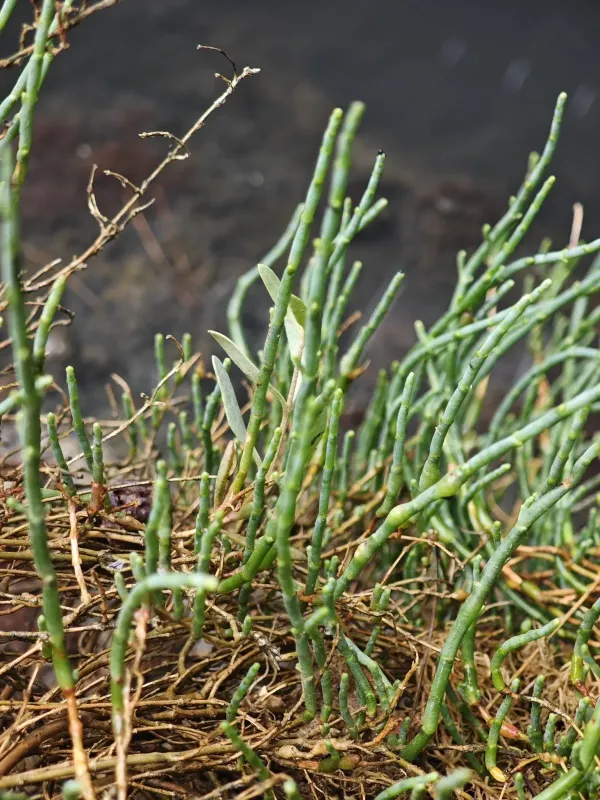
Description
Sowing dates
Sarcocornia fruticosa belongs to the Amaranthaceae family and is a perennial subshrub halophyte. The seeds of this crop possess high viability, yet germination success depends heavily on specific moisture levels and salt concentrations within the soil solution.
In commercial settings, sowing is typically carried out in spring when substrate temperatures consistently stay above 15 degrees Celsius. Surface sowing is recommended as the tiny seeds require adequate light exposure to achieve successful stratification and germination.
Under controlled greenhouse conditions, seeds are often sown in seedling trays to maximize survival rates. When direct sowing is employed, ensuring firm contact between the seeds and the damp soil is essential, as the drying of the top layer can be fatal to young sprouts.
Planting density varies based on production goals: higher densities are preferred for biomass harvesting, while lower densities are used for seed production to facilitate better airflow. Maintaining row spacing between 30 and 50 centimeters is advised to minimize intraspecific competition.
The crop exhibits a strong capacity for vegetative reproduction, meaning stem cuttings are frequently used as a reliable alternative to seed sowing, particularly when working with high-yielding commercial clones.
Growing requirements
The primary requirement for successful Sarcocornia cultivation is the presence of saline soil or irrigation with high-salinity water. The plant has evolved unique physiological mechanisms to adapt to conditions that would be lethal to most traditional agricultural crops.
Optimal growth occurs on sandy or silty soils found in coastal marshes and salt flats. The plant is highly tolerant of prolonged waterlogging, allowing it to be integrated into aquaponic systems where it efficiently filters water by absorbing excess sodium and other salts.
Full sun exposure is critical for the development of Sarcocornia, as shading leads to elongated stems and a reduction in the accumulation of target nutrients. The ideal climate mimics Mediterranean or subtropical conditions, characterized by the absence of extreme winter frosts.
Mineral nutrition requirements are specific: despite its affinity for salt, the plant responds well to nitrogen fertilizers during active growth periods. However, excessive phosphorus must be avoided as it can interfere with the uptake of micronutrients in highly saline conditions.
Water is a limiting factor for growth. During dry spells, regular irrigation is mandatory, as dehydration leads to rapid lignification of the stems, which degrades the commercial quality of the harvest.
Yield
Yields of Sarcocornia depend significantly on soil salinity levels and the availability of nitrogen. Under proper management in industrial settings, the crop can produce substantial amounts of green biomass per hectare.
Harvesting is usually done by cutting the young, succulent shoots. Regular pruning stimulates bushiness, allowing for multiple harvests within a single season and significantly increasing total productivity per plant.
Growth intensity slows down in autumn, making the main harvesting window range from late spring to early autumn. With correct agrotechnical practices, individual bushes can remain productive and retain high nutritional value for 3 to 5 years.
Applications include the food industry, where it is used as a culinary delicacy, and the pharmaceutical industry, which values its plant extracts. Furthermore, Sarcocornia is considered a promising feedstock for biofuel production due to the high lipid content found in its seeds.
Economic viability is enhanced by utilizing degraded saline lands that were previously unsuitable for traditional farming, positioning Sarcocornia as a vital asset for sustainable and regenerative agriculture.
Main diseases and pests
Sarcocornia possesses high natural disease resistance due to its ability to accumulate salts in its tissues, which suppresses many common phytopathogens. However, high humidity combined with poor airflow can lead to fungal issues.
Key threats include powdery mildew and various types of root rot, which typically appear when water drainage is inadequate. Prevention relies on maintaining proper plant spacing and ensuring that the substrate does not remain stagnant.
Insect pests can occasionally feed on the succulent stems, though widespread outbreaks are rare because the salt-rich tissues act as a natural deterrent for most generalist insects. Monitoring is still required to manage potential virus vectors.
Integrated pest management should be practiced with caution, as the produce is intended for human consumption. Any pesticide application must strictly adhere to residue limits for food-grade crops.
Weed control is an essential agrotechnical measure, especially during the early stages of plant establishment. Despite its salt tolerance, Sarcocornia can struggle against aggressive halophytic weeds, necessitating regular weeding routines to ensure maximum yield.
Harvesting
Harvesting Sarcocornia requires precision to avoid damaging the root system. Young shoots measuring 10–15 centimeters in length are the most valuable, offering the most delicate texture and a balanced, salty flavor profile.
Hand-harvesting is the standard method, allowing for the selection of high-quality stems that meet market requirements. For large-scale production, specialized mechanical harvesters with adjustable cutting heights are utilized to improve efficiency.
Harvested produce must be cooled immediately to preserve turgor and prevent wilting. Sarcocornia is highly sensitive to temperature fluctuations after harvest, so packaging must ensure a high-humidity environment.
Post-harvest processing involves sorting based on stem length and the degree of lignification. This categorization allows for efficient distribution to diverse markets, including fine dining establishments and food processors.
Storage should be conducted at low temperatures (around 2–4 degrees Celsius) in sealed containers. This maintains freshness for up to a week, which is sufficient for regional logistics and retail supply chains.