
Perennial glasswort
Sarcocornia perennis
Description
Growing requirements
Sarcocornia perennis is a member of the Amaranthaceae family, recognized for its exceptional ability to thrive in highly saline environments. This perennial succulent is natively found in coastal salt marshes and estuaries across various continents.
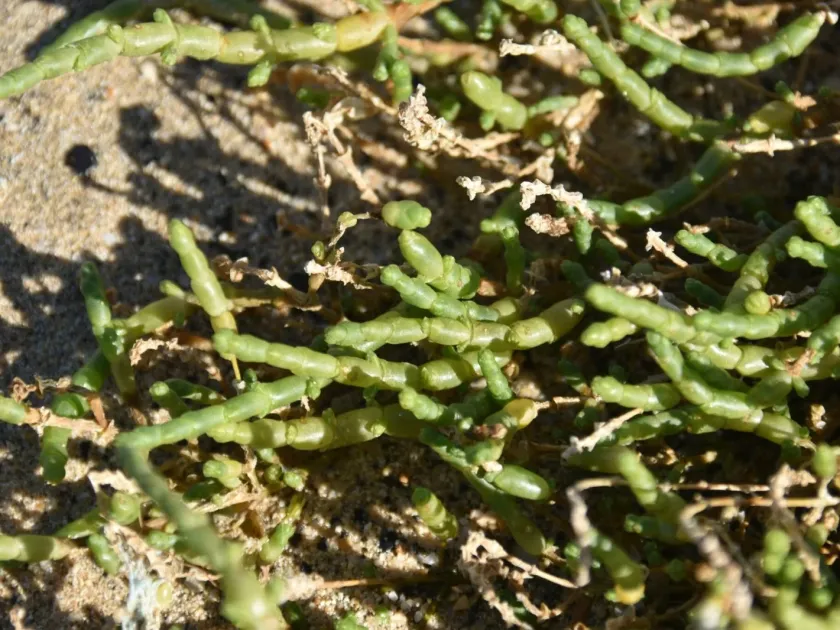
The plant is characterized by its succulent, jointed stems that store moisture, allowing it to survive in harsh, saline soils where most conventional crops would wither. Its root system is highly specialized for absorbing nutrients from saline substrates.
Climatic requirements focus on high solar radiation and stable humidity. While it is highly tolerant to heat, it performs best in temperate maritime climates that provide consistent moisture through natural salt spray or tidal influence.
For successful cultivation, soil requirements involve high mineral content and consistent salinity levels. Growers often use seawater-based irrigation systems to maintain the osmotic balance necessary for the plant’s optimal growth and development.
The economic value of this crop is multifaceted, primarily focusing on the culinary market where its salty, crunchy shoots are highly sought after as a gourmet ingredient often referred to as sea asparagus.
Main diseases and pests
Disease pressure is generally low for Sarcocornia due to its high salt tolerance, which acts as a natural deterrent against many soil-borne pathogens.
In terms of pests, the plant is relatively resilient, but occasional infestation by specialized coastal insects or mollusks may occur during the establishment phase, requiring careful monitoring.