
Philoxerus wrightii
Philoxerus wrightii
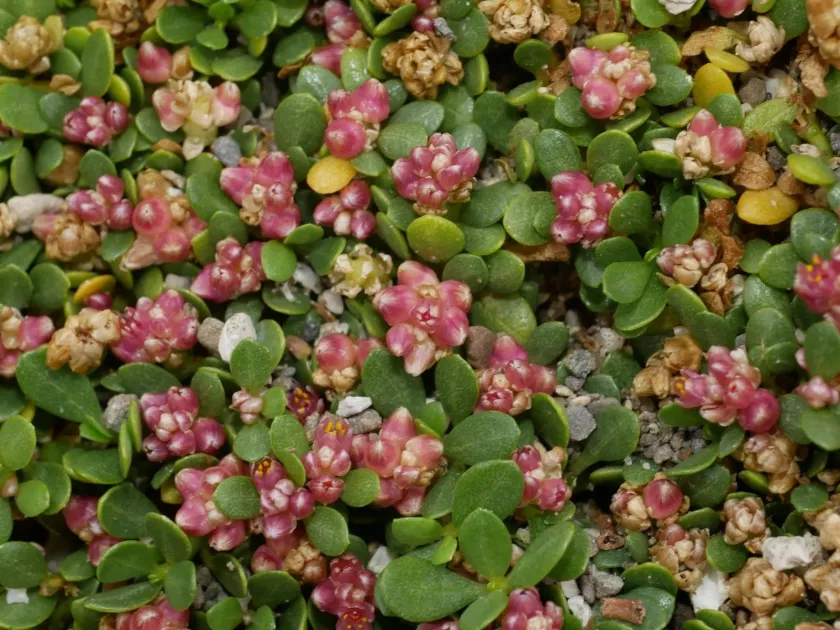
Description
Growing requirements
Philoxerus wrightii is a perennial herbaceous plant belonging to the Amaranthaceae family. It is characterized by its succulent-like foliage, which allows it to thrive in challenging environments where water retention and resilience are paramount.
The plant originates from coastal regions and sandy habitats in tropical and subtropical climates. Its native distribution highlights its evolutionary adaptation to saline environments and unstable soil substrates, such as dunes and sandy flats.
Successful cultivation requires well-draining, sandy soils that mimic its natural habitat. It is a strictly heliophilic species, meaning it requires full sun exposure to maintain optimal physiological health and growth density.
Regarding climate, Philoxerus wrightii thrives in warm, frost-free environments. It possesses high drought tolerance, which makes it an excellent choice for xeriscaping projects where water conservation is prioritized.
Agrotechnical practices involve providing minimal but consistent maintenance. While it does not require high levels of soil fertility, preventing waterlogging in the root zone is the most critical factor in ensuring long-term plant survival.
Harvesting
The primary horticultural application of this species is as a decorative groundcover. It is widely used in landscape design to create dense, low-maintenance mats that effectively cover ground surfaces in sunny garden areas.
Beyond aesthetics, Philoxerus wrightii is utilized for phytostabilization of sandy soils. Its root system helps bind loose particles, making it a functional plant for erosion control in coastal or arid landscaping projects.
Propagation is efficiently achieved through stem cuttings. These cuttings establish roots rapidly in moist sand, allowing landscapers to scale up plantings easily without the need for sophisticated nursery equipment.
Maintenance involves periodic pruning to manage the spread of the plants and to keep the desired contours. Since the plant is a prolific grower in suitable conditions, occasional trimming helps maintain a tidy appearance.
In terms of sustainability, it is a low-input crop that does not demand chemical fertilizers or excessive irrigation, making it an environmentally friendly choice for large-scale landscaping and urban greening initiatives in warmer zones.