
Nanophyton erinaceum
Nanophyton erinaceum
Description
Growing requirements
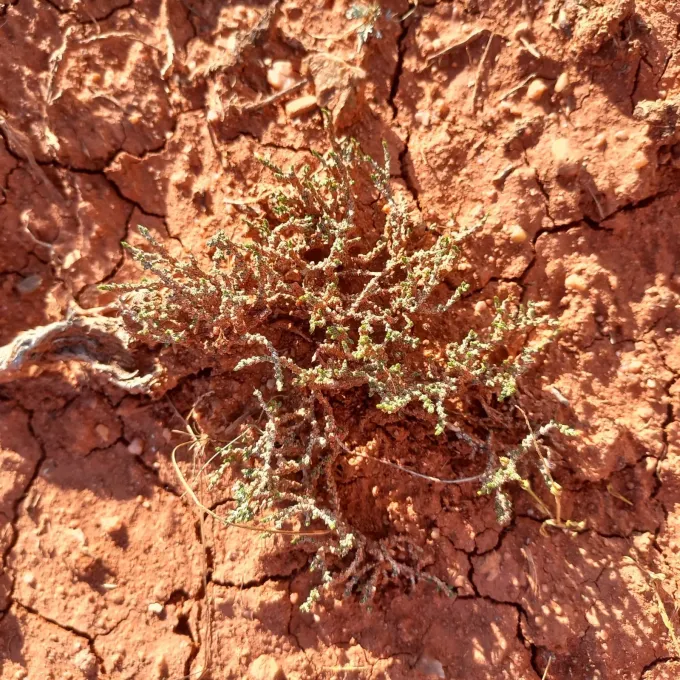
Nanophyton erinaceum is a perennial subshrub belonging to the Amaranthaceae family. It is a highly specialized plant adapted to extreme arid conditions, commonly found in the desert landscapes of Eurasia.
The plant is categorized as a halophyte, meaning it is specifically evolved to thrive in soils with high salt concentrations. It typically grows in saline, rocky, or gravelly plains where water availability is extremely limited.
Botanically, it features highly branched, rigid stems that protect the plant from extreme temperatures and browsing pressure. Its root system is extensive, allowing it to penetrate deep into the substrate in search of groundwater.
Climate requirements include high solar radiation and low precipitation levels. The species is highly tolerant to extreme heat during the day and significant temperature drops during the night and winter seasons.
The primary agricultural utility of this plant is as a source of winter forage for livestock, particularly camels and sheep. It provides essential minerals that are often lacking in the diet of desert-dwelling animals.
Main diseases and pests
Nanophyton erinaceum is remarkably resistant to typical plant pathogens due to its dense cellular structure and high mineral content, which inhibit fungal growth.
The main threat to the species is overgrazing by herds, which can lead to the fragmentation of its cushion-like growth and subsequent soil erosion in desert environments.
Insects such as locusts and some species of beetles may feed on the plant, but these occurrences are usually localized and do not cause systemic damage to the population.
Soil compaction caused by heavy livestock traffic is another factor that limits the establishment of new seedlings and reduces the density of the stands.
Given its ecological role as a stabilizer of desert soils, conservation management is necessary to prevent habitat loss and ensure the long-term sustainability of the pasture.