
Halocnemum strobilaceum
Halocnemum strobilaceum
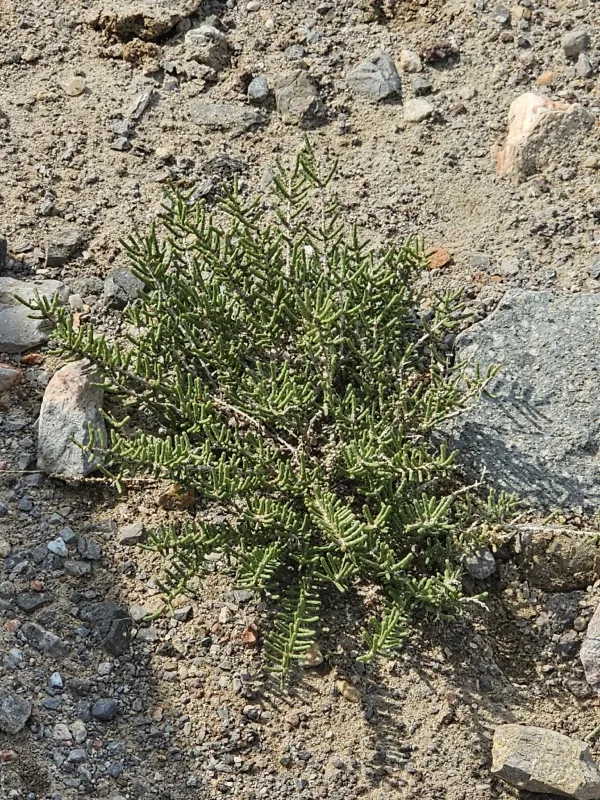
Description
Growing requirements
Halocnemum strobilaceum, commonly known as a type of saltwort or succulent shrub, is a member of the Amaranthaceae family. It is a highly specialized halophyte adapted to extremely saline environments where other conventional crops cannot survive. This species is native to arid regions across Eurasia, particularly in salt marshes and saline deserts.
The plant is a perennial succulent shrub with segmented, cone-like stems. Its botanical structure is optimized for water retention, allowing it to withstand high temperatures and long periods of drought. This resilience is supported by a deep and efficient root system designed to extract moisture from salty substrates.
To cultivate this species, one must provide open, sunny sites with high salt concentration in the soil. It does not require conventional fertilization, as it is evolved to thrive in nutrient-poor, saline conditions. In many cases, it acts as a pioneer species that prepares land for further ecological stabilization.
Agricultural use of Halocnemum strobilaceum primarily centers on its role as a hardy forage plant. During harsh seasons, it provides essential nutrition for camels and sheep, serving as a vital resource in arid zone pastoralism. Its ability to accumulate salt makes it a candidate for phytoremediation.
Beyond its feed value, the crop is valued for its soil-binding properties. By stabilizing the soil surface, it prevents wind and water erosion in desert environments, contributing significantly to sustainable land management in vulnerable ecosystems.
Main diseases and pests
Halocnemum strobilaceum is naturally protected by the salt-rich environment in which it grows. Most traditional agricultural pathogens cannot tolerate high salinity, which effectively shields the plant from a wide range of standard crop diseases such as root rot or fungal blights.
Pest pressure is generally low, limited to specific specialized insects that have evolved to feed on halophytes. These pests typically exist in a natural balance with the host plant and rarely reach the threshold where crop yields are significantly compromised.
The most substantial threats to this culture are changes in hydrogeology, specifically sudden fluctuations in soil salinity levels or waterlogging. While the plant is drought-resistant, it can be sensitive to prolonged stagnant water, which may cause physiological stress.
Overgrazing represents a major threat, particularly during the early stages of plant development. Without adequate periods of rest, the succulent stems can be consumed too rapidly, hindering the plant's ability to regenerate and spread throughout the landscape.
Management strategies should focus on sustainable grazing practices and monitoring the soil salinity levels. Maintaining the habitat's natural chemical state is the most effective form of disease and stress prevention for this unique halophytic crop.