
Limnophyton obtusifolium
Limnophyton obtusifolium
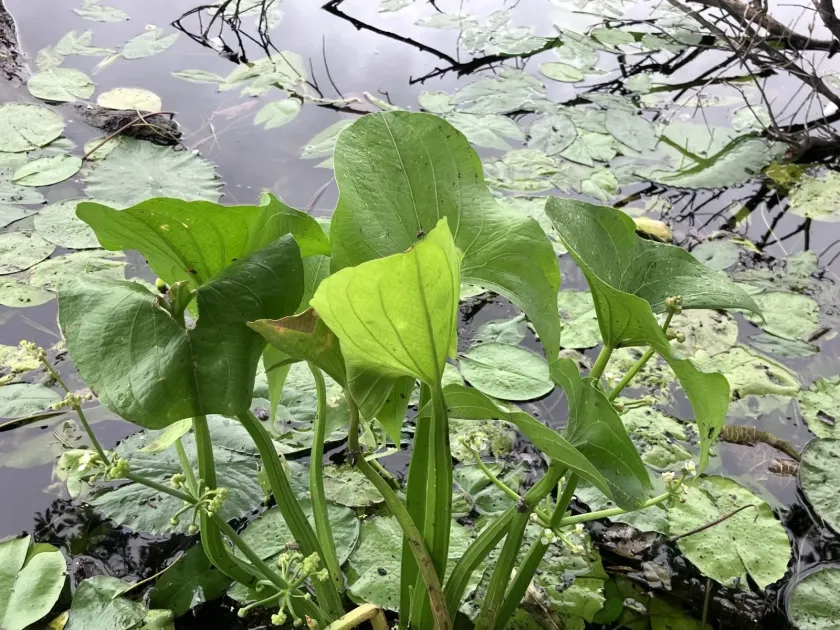
Description
Growing requirements
Limnophyton obtusifolium is a perennial herbaceous plant belonging to the Alismataceae family. It is a hydrophytic species well-adapted to swampy and aquatic environments, commonly found in tropical regions of Africa and parts of Southeast Asia.
The plant typically grows in wetlands, shallow margins of freshwater bodies, and flooded paddy fields. It thrives in high-temperature environments where humidity remains consistent throughout the growing season.
Soil and water quality are critical for this species. It prefers silt-rich, fertile substrates that provide adequate nutrients. The plant functions effectively as an aquatic crop, showing high productivity in shallow, warm water environments.
Botanically, it is characterized by obtuse-shaped leaves arranged in a rosette and distinct flowering stalks. Its root system is designed for nutrient uptake in submerged conditions, allowing it to dominate in its niche ecosystem.
Agricultural use of Limnophyton obtusifolium includes its role as a local dietary supplement in some tropical regions and its potential use as biomass or forage. Its cultivation requires careful management of water levels to mimic its natural habitat.
Main diseases and pests
The main threats to this crop include various fungal pathogens that flourish in stagnant, warm water. These infections typically cause root rot and leaf decay, significantly reducing overall plant health.
Pest pressure comes primarily from aquatic snails and certain insect larvae that consume the soft leaf tissues. In intensive cultivation, these pests can cause substantial yield loss if left uncontrolled.
Competition from invasive aquatic weeds often poses a major challenge. Fast-growing species can crowd out Limnophyton, depriving it of essential sunlight and mineral resources necessary for development.
Environmental stress, such as rapid changes in water salinity or severe pollution, can hinder plant growth. As an aquatic species, it is highly sensitive to the chemical composition of its surrounding water medium.
Effective management requires regular monitoring of the water environment and manual weeding of competitive species. Maintaining proper water flow can also help prevent the accumulation of pests and disease-causing organisms.