
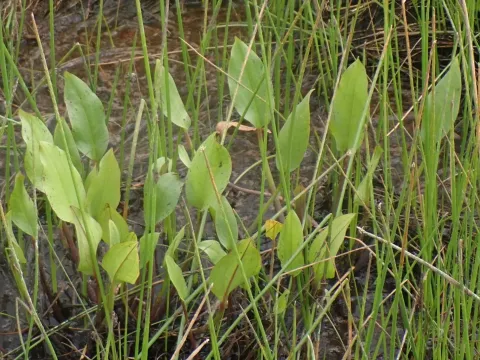
Alisma triviale
Alisma triviale
Sowing of Alisma triviale seeds is carried out in the spring after water and soil temperatures reach 15–18 degrees Celsius. Because seeds require stratification, autumn sowing in moist substrates is a common practice to ensure successful germination in the following season.
What the section contains
Alisma triviale
The seeds are sown directly into the bottom substrate of ponds or in specialized nursery containers filled with nutrient-rich silty soil. It is crucial to maintain a stable water level, ensuring that the substrate remains saturated during the sensitive early germination period.
The recommended seeding density is 5–8 plants per square meter to ensure adequate space for development. Surface sowing is essential, as the embryos require exposure to sunlight to trigger the germination process effectively.
Vegetative propagation via rhizome division is an alternative method to speed up the establishment of a commercial crop. This should be performed at the start of the active growth phase before the plant redirects its energy into foliage development.
Once true leaves appear, the water level should be increased gradually to allow the plant to adapt to deeper submerged conditions. Monitoring the water level is critical during the first month to avoid stressing the young seedlings.
Alisma triviale, a member of the Alismataceae family, is a typical hydrophyte perfectly adapted to high-moisture environments. It thrives in shallow waters with a depth ranging from 10 to 30 centimeters, although it can also persist along shorelines with wet soil conditions.
The soil should be nutrient-dense, preferably silty or clay-based, with a neutral to slightly acidic pH. The plant is highly effective at absorbing nitrogen and phosphorus, making it an excellent candidate for artificial wetland systems and water purification projects.
Climate requirements include moderate lighting; the plant prefers full sun to light shade, as extreme shading can cause spindly growth and reduced flower production. The species is highly adaptable, native to various regions of North America, and exhibits high tolerance to environmental stressors.
Good circulation and water quality are vital for optimal development, as stagnant, oxygen-poor water can impede root health. In intensive cultivation, it is important to prevent competition from invasive algae that can quickly dominate the surface area.
Fertilization should be handled carefully, focusing on bottom-feed fertilizers rather than water-column applications to avoid algal blooms. Proper spacing and ecosystem management are key to maintaining a healthy and productive stand of Alisma triviale.
The yield of Alisma triviale is measured by the biomass of both the foliage and the starchy rhizomes, which have significant value in botanical and pharmaceutical sectors. Under controlled conditions, biomass can reach 3–5 tons of dry weight per hectare.
The root system develops into robust, starch-rich rhizomes by the end of the second year of cultivation. Proper thinning and the removal of premature flower stalks can significantly increase the size and quality of these underground organs.
Yield quality is highly dependent on water purity and the concentration of dissolved minerals in the aquatic environment. Higher quality biomass is produced in cleaner, managed habitats, which is essential for medicinal raw material requirements.
Commercial harvesting is typically structured in two cycles: an initial foliage harvest in late spring and a root harvest in the autumn. This periodic approach balances crop renewal with maximal seasonal growth efficiency.
Monitoring the growth rate against nutrient availability in the water allows for data-driven adjustments to management practices. Maximizing yield requires a balance between harvesting pressure and the plant's ability to regenerate its vegetative base.
Alisma triviale is susceptible to fungal diseases such as leaf spots and various rusts, especially when grown in dense, poorly ventilated stands. These diseases thrive in the high humidity common in wetland environments.
Pest threats include leaf-eating insects and various aquatic mollusks that can cause significant damage to foliage. Root damage from larvae of aquatic beetles is another challenge that must be monitored throughout the growing season.
Chemical control is rarely appropriate in aquatic settings, making integrated pest management (IPM) the most sustainable approach. Promoting natural predators within the pond ecosystem can effectively keep pest populations in check.
Viral infections may manifest as mosaic patterns or leaf deformations, which lower the commercial quality of the plant. Infected specimens should be identified and removed promptly to stop the spread within the cultivation area.
Regular monitoring of plant health is an essential task for any grower. Early identification of symptoms—whether from fungal, pest, or viral sources—is the only way to manage large-scale cultivation without the heavy use of synthetic chemicals.
Harvesting the aerial parts is conducted during the intense flowering phase, when the concentration of bioactive compounds in the leaves is at its peak. Clean tools are necessary to prevent mechanical damage to the rhizomes during the cutting process.
Rhizomes are harvested in the autumn after the foliage begins to senesce, which indicates that the plant has stored nutrients in the underground storage organs. Once harvested, the rhizomes must be cleaned immediately of silt and organic debris.
Drying should take place in well-ventilated, shaded facilities at temperatures not exceeding 45 degrees Celsius to preserve volatile organic compounds and medicinal properties. Excessive heat can degrade the chemical composition of the plant.
The dried product should be stored in moisture-proof containers in a cool, dark, and well-ventilated environment. Proper storage prevents mold growth and preserves the shelf-life of the agricultural product.
Stringent sorting at the harvest and cleaning stages is crucial to ensure high product quality. Removing foreign debris and diseased plant tissues before final processing is a mandatory part of the harvesting protocol.