
Arumleaf arrowhead
Sagittaria cuneata
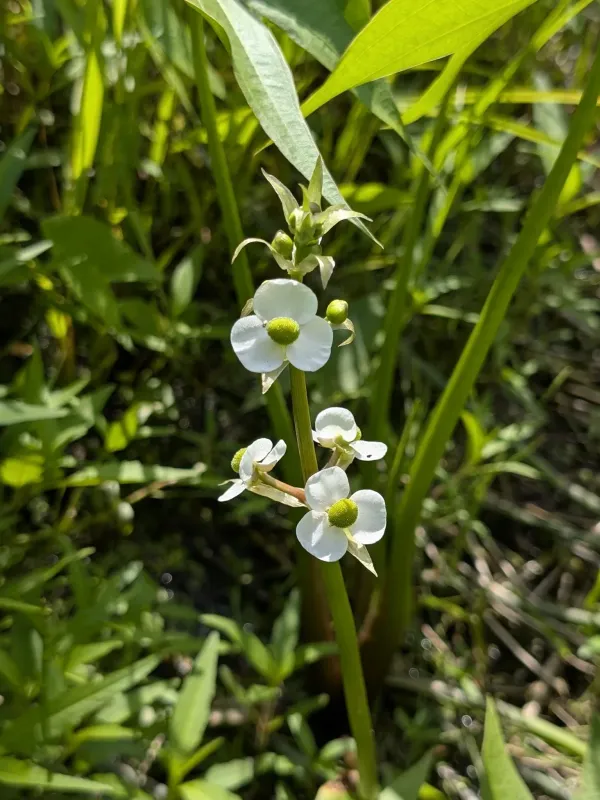
Description
Growing requirements
Arumleaf arrowhead (Sagittaria cuneata) is a perennial aquatic plant belonging to the Alismataceae family. It is native to North America, where it thrives in diverse wetland environments.
The plant grows optimally in shallow waters of ponds, marshes, and river margins. It requires sunlight exposure to ensure sufficient photosynthesis for the development of its specialized underground organs.
Regarding soil requirements, this species favors organic-rich silt or mud substrates. These substrates provide the necessary nutrients for the development of long stolons that penetrate the sediment.
Climate adaptation is a hallmark of this species, as it is well-suited to temperate climates. Its ability to survive winter in frozen or cold water depends on the insulating properties of the surrounding mud and water column.
Botanically, the plant produces characteristic sagittate leaves that emerge from the water. The development of tubers at the ends of the underground runners is a key stage in the plant's life cycle.
Harvesting
Historically, the primary use of Arumleaf arrowhead is as a food source. The starch-rich tubers produced by the plant were a staple in the diets of indigenous peoples in North America.
The harvest period occurs in the autumn months. During this time, the plant's foliage begins to senesce, signaling that the majority of nutrients have been transferred from the stems to the tubers.
Harvesting techniques involve carefully extracting the tubers from the muddy bottom. This process requires patience to minimize damage to the tubers and ensure a clean final product for culinary use.
Once harvested, the tubers should be washed thoroughly. They are typically cooked by boiling, baking, or roasting, which improves their texture and makes the starch more digestible.
Beyond human consumption, the plant serves an ecological role. Its ability to absorb nutrients makes it a candidate for managed wetlands aimed at water quality improvement and habitat restoration.