
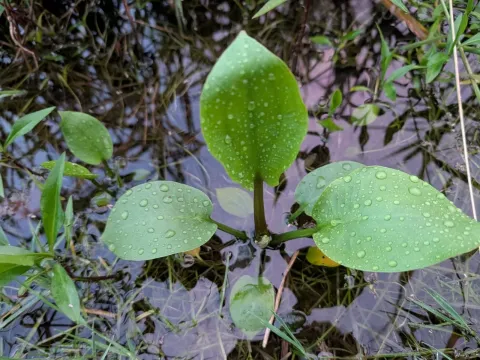
Alisma subcordatum
Alisma subcordatum
Alisma subcordatum is a perennial aquatic plant belonging to the Alismataceae family. Propagation typically starts with seeding in a moist, nutrient-rich substrate under controlled greenhouse conditions.
What the section contains
Alisma subcordatum
Seeds are highly sensitive to moisture loss, so maintaining constant hydration during the germination phase is essential for successful seedling establishment.
Once seedlings have reached sufficient size, they are transplanted into open water bodies or saturated soil environments after the risk of frost has passed.
Proper spacing is crucial to prevent overcrowding, which can facilitate disease spread and competition for essential light resources in dense aquatic plantings.
Stratification of seeds prior to sowing is a recommended agronomic practice to break dormancy and ensure uniform emergence across the crop area.
This crop thrives in muddy, organic-rich substrates that are typical of wetland habitats, providing the necessary nutrients for vigorous development.
As an obligate hydrophyte, the plant requires its root zone to be permanently submerged or heavily saturated, making hydrology management the primary focus.
Optimal growth is achieved in sunny locations, as the plant exhibits reduced vigor and poor structural integrity in deep shade conditions.
The climate requirement is primarily temperate, with the species demonstrating high hardiness as long as the core hydrological parameters remain stable throughout the season.
Agronomic maintenance includes periodic monitoring of water quality and sediment depth, ensuring the root environment remains conducive to healthy plant growth.
The primary threats include root and crown rots, which are often triggered by stagnant water conditions and poor water circulation within the plantation area.
Leaf-feeding insects can cause significant damage, leading to reduced photosynthetic capacity and making the plants more susceptible to secondary pathogens.
Sanitation practices, such as removing decaying plant material, are vital for disease control in an environment where chemical pesticides are rarely applicable.
Competition from aggressive algae and invasive aquatic weeds requires active management and regular clearing of the growth zone during the early stages.
Maintaining a balanced ecosystem helps in suppressing pest populations naturally, thereby protecting the crop from significant yield losses.