
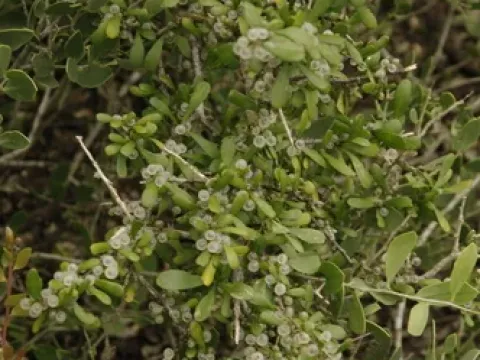
Phaulothamnus
Phaulothamnus
Phaulothamnus (scientific name Phaulothamnus spinescens) is a perennial woody shrub belonging to the Achatocarpaceae family. This species is native to the arid environments of northern Mexico and the southwestern United States, where it thrives in challenging desert landscapes.
What the section contains

Phaulothamnus
Botanically, it is defined by its highly branched, spiny structure which acts as a defense mechanism against herbivores. The plant is a typical xerophyte, uniquely adapted to survive in regions with very low annual precipitation, demonstrating remarkable metabolic efficiency.
Agricultural success with Phaulothamnus depends entirely on providing full solar exposure. It cannot tolerate shade, as the lack of direct sunlight causes the plant to weaken and lose its characteristic compact and thorny structural integrity.
The soil requirements are strict: the substrate must have excellent drainage. Sandy, rocky, or gravely soils with an alkaline pH are preferred. Any soil that retains moisture for extended periods will likely lead to root rot and eventual death of the specimen.
Regarding its utility, the plant is primarily used in xeriscaping and ecological restoration projects. Its ability to create impenetrable, thorny thickets makes it an effective biological barrier for soil stabilization and landscape protection in desert regions.
The most significant threats to Phaulothamnus are fungal pathogens exacerbated by high humidity. When the plant is exposed to environments outside its natural range, excessive moisture around the roots or foliage promotes rapid fungal proliferation.
Spider mites represent the primary pest risk for this shrub. In hot and dry climates, these pests can quickly colonize the foliage, draining the plant of vital sap and potentially causing significant stress or defoliation if left untreated.
Mechanical damage to the stems can also serve as an entry point for bacterial infections. Because the plant is covered in thorns, injury during maintenance is a risk factor, so pruning should be kept to a minimum and performed with sterilized equipment.
Over-fertilization with nitrogen is another major threat to the health of the plant. Excess nutrients induce soft, rapid growth that is highly attractive to insect pests and less resistant to the natural environmental stressors for which the plant is evolutionarily prepared.
Preventative care is centered on maintaining an arid microclimate. Avoiding irrigation systems that spray water directly onto the foliage is essential to keep the plant's surface dry and minimize the risk of secondary infections common in non-native habitats.