
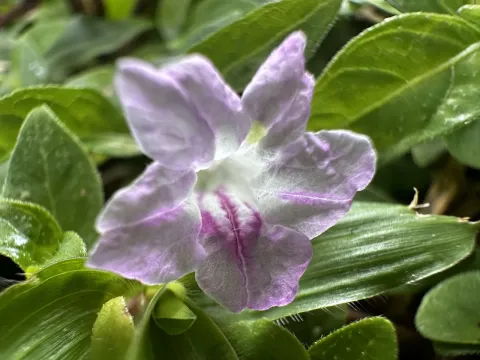
Ruellia repens
Ruellia repens
The propagation of Ruellia repens is primarily carried out through seeds or stem cuttings. Seed sowing is best performed in a warm, humid environment during early spring to maximize the growth period.
What the section contains
Ruellia repens
A high-quality seed-starting mix should be utilized, ensuring excellent drainage and light aeration to prevent seed rot during the germination phase.
Germination requires a consistent temperature of approximately 24 degrees Celsius. It is crucial to keep the substrate moist but not waterlogged during this delicate stage of development.
Once seedlings achieve a height of 5–10 centimeters, they should be carefully transplanted into larger containers or prepared field plots to minimize root disturbance.
Gradual acclimatization to external conditions is recommended before full transplanting to ensure that the plant develops a robust root system capable of nutrient uptake.
Belonging to the Acanthaceae family, Ruellia repens thrives in tropical and subtropical climates. It demands a position with bright, indirect light, as direct midday sun may scorch the delicate foliage.
The soil should be nutrient-rich, well-draining, and slightly acidic to neutral. Regular application of organic matter is beneficial for maintaining long-term soil fertility.
Consistent moisture is required throughout the growing season. While the plant can tolerate short periods of drying, sustained drought will negatively impact vegetative growth and flowering.
High relative humidity is essential for the optimal physiological function of the plant. In arid environments, supplemental misting or humidity control systems are mandatory for success.
Temperature management is critical; the plant should be shielded from temperatures below 15 degrees Celsius, which can stunt development or trigger dormancy.
Spider mites represent a significant threat to Ruellia repens, especially in greenhouse environments where humidity levels are not properly regulated.
Fungal infections, such as root rot, often occur if the soil structure becomes compacted or if irrigation practices lead to prolonged water stagnation around the base of the stem.
Whiteflies and aphids can become a concern during the peak growing months, feeding on plant juices and acting as vectors for various plant pathogens.
Early detection is the most effective defense. Producers should implement integrated pest management strategies to keep populations below economic injury levels.
- Implement strict quarantine for new plants.
- Ensure proper airflow to reduce humidity-related diseases.
- Utilize balanced insecticidal soaps.
- Maintain healthy soil structures with adequate drainage.
Harvesting strategies depend on whether the plant is being utilized for ornamental purposes or for medicinal extract production, which is common for this species.
For medicinal use, foliage is harvested when the plant is in its peak vegetative growth phase, ensuring high concentrations of secondary metabolites.
Proper drying techniques are required post-harvest to prevent mold development. The biomass should be dried in a shaded, well-ventilated area until reaching the desired moisture content.
Care must be taken to harvest only mature, healthy branches, allowing the central root crown to remain intact for potential regrowth in the following cycle.
Mechanical harvesting is generally not recommended for small-scale production, as manual harvesting ensures higher quality and minimal damage to the plant structure.