
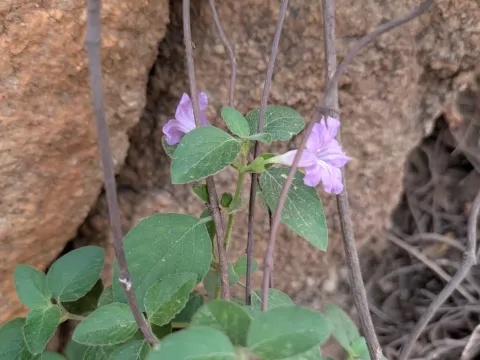
Ruellia patula
Ruellia patula
Ruellia patula is a perennial subshrub belonging to the Acanthaceae family. Originally native to arid regions of Africa and parts of India, this plant is well-adapted to surviving in challenging, dry environments with high heat exposure.
What the section contains
Ruellia patula
The botanical structure of the plant features small, often hairy leaves and distinct funnel-shaped flowers, which are characteristic of the genus. Its root system is developed to maximize water uptake from deep, rocky soils, making it highly drought-tolerant once established.
Regarding soil requirements, Ruellia patula thrives in well-draining, sandy or rocky substrates. It does not tolerate waterlogging, which often leads to root hypoxia, so providing an efficient drainage system is mandatory for both container and outdoor cultivation.
The optimal climate for this species is hot and bright, with temperatures ranging from 20 to 30 degrees Celsius. It requires significant sunlight to maintain its compact growth form; in low-light conditions, the plant tends to become spindly and loses its decorative appeal.
In terms of agricultural and horticultural use, this species is primarily utilized for landscape gardening in xeriscaping projects. It serves as an excellent plant for erosion control on slopes and as a hardy ornamental for gardens in tropical and subtropical regions.
The primary threats to Ruellia patula are fungal pathogens that thrive in damp or poorly ventilated conditions. Root rot, caused by species of Pythium or Phytophthora, is the most common issue resulting from overwatering or poorly draining soil.
Pests such as spider mites are particularly problematic during hot, dry seasons, especially in greenhouse environments. These pests feed on the underside of leaves, leading to chlorosis and eventual necrosis of the foliage if left untreated.
Mealybugs are another group of sucking insects that can infest the stems and axils of the leaves. Manual removal or the use of systemic insecticides is often necessary to prevent significant colony growth and plant weakening.
Soil-borne nematodes can also impact the vigor of the plant by damaging the roots, which leads to stunted growth and yellowing of the leaves. Sterilizing the planting medium is a recommended preventative measure for professional nurseries.
Proper hygiene, such as removing fallen leaves and ensuring adequate spacing between plants, is essential to reduce the risk of infestation. Maintaining a balanced fertilization schedule helps the plant withstand minor pest pressures without compromising its structural integrity.