
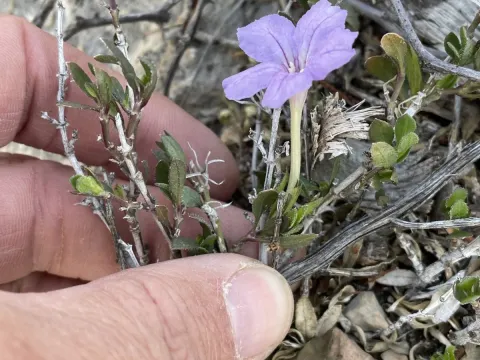
Ruellia parryi
Ruellia parryi
Ruellia parryi is a perennial herbaceous plant belonging to the Acanthaceae family. It is recognized for its adaptability to harsh environments, making it a distinctive species within the genus for specialized landscaping and botanical collections.
What the section contains
Ruellia parryi
The native distribution of this species is centered in the arid regions of North America, particularly within the arid zones of Mexico. It thrives in environments characterized by high solar radiation and low annual precipitation, reflecting its drought-tolerant nature.
Cultivation of Ruellia parryi necessitates well-draining soil structures. The plant is highly susceptible to root decay if the substrate remains saturated, thus requiring coarse, porous media such as sandy or rocky soil mixes for optimal root development.
As a heliophilous species, it demands full exposure to direct sunlight. When maintained under these conditions, the plant displays robust growth and frequent flowering cycles, which are hallmark traits of healthy specimens in their natural habitat.
Temperature tolerance is a critical factor for the successful management of this crop. While it thrives in warm climates, it must be protected from prolonged freezing temperatures. In temperate zones, it is frequently handled as a potted plant to facilitate winter protection.
Root pathogens represent the most significant threat to Ruellia parryi. Excessive moisture in the root zone frequently encourages the proliferation of fungal organisms that cause systemic wilting and eventual plant death.
Spider mites are the most prevalent pest affecting this species in dry, indoor, or greenhouse conditions. They rapidly exploit the foliage, resulting in stunted development and severe chlorosis if the infestation is not addressed with appropriate acaricides.
Aphid populations may occasionally colonize the terminal growth of the plant. These insects feed on succulent tissues, potentially transmitting viral pathogens, and should be controlled using targeted systemic insecticides or horticultural oils.
Soil-borne nematodes can cause significant physiological stress by compromising root integrity. Crop rotation and the sterilization of container substrates are essential practices to mitigate the risk of nematode-induced decline in plant vigor.
To ensure long-term health, growers must monitor foliage for signs of fungal spots during periods of high atmospheric humidity. Maintaining low leaf wetness and ensuring adequate airflow are vital preventative measures for this species.