
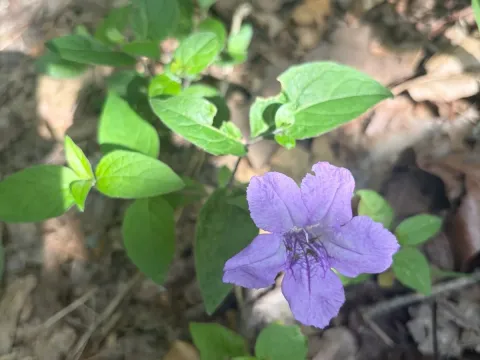
Ruellia pedunculata
Ruellia pedunculata
Sowing seeds of Ruellia pedunculata is usually carried out in late winter or early spring using a seedling method. The seeds require surface sowing because they need access to light for germination.
What the section contains
Ruellia pedunculata
To ensure successful germination, it is necessary to maintain a substrate temperature of 20–22 degrees Celsius. It is crucial to provide stable soil moisture without waterlogging to avoid fungal diseases in young seedlings.
Seedlings are pricked out after the appearance of two to three true leaves. Young plants are extremely sensitive to temperature fluctuations, so they must be gradually hardened off for several weeks before being transplanted outdoors.
In regions with mild climates, direct sowing into the ground is possible after the threat of spring frosts has passed. However, this method is less predictable and requires thorough preparation of the seedbed.
For vegetative propagation, cuttings are taken in summer and rooted in a sand-peat substrate under film. This method preserves all the varietal characteristics of the parent plant, which is important for professional horticulture.
Ruellia pedunculata belongs to the Acanthaceae family and is a herbaceous perennial plant. In natural conditions, it is found in forest areas and open spaces of North America.
The crop prefers well-drained, fertile soils with a neutral or slightly acidic pH reaction. It does not tolerate water stagnation, which leads to rapid decay of the root system.
Optimal lighting for this plant is partial shade or diffused light. Direct sunlight at noon can cause burns on delicate leaves, so choosing a planting site with natural shade is essential.
The plant has moderate drought resistance; however, for abundant flowering, regular watering is required during periods of active growth. In hot months, it is important to monitor air humidity, as dry air inhibits the crop's development.
Mulching the soil around the plants is recommended to maintain aesthetic appeal. Mulch helps preserve soil structure, retain moisture, and suppress weed growth, which significantly simplifies the care of the plantings.
The main pests of Ruellia are spider mites and whiteflies, which often attack plants in low-humidity conditions. Regular inspection of the underside of the leaves allows for early detection of these insects.
With excessive watering, the plant is susceptible to root and stem rots caused by fungi of the Fusarium and Phytophthora genera. Prevention involves following a proper watering schedule and using high-quality drainage.
Powdery mildew can affect leaves during periods of poor air circulation in the plantings. Modern systemic fungicides are used for control, along with thinning out the bushes to improve aeration.
Sometimes aphids can be found on young shoots, sucking sap and leading to leaf deformation. Protective measures include the use of soap solutions or specialized insecticides.
An important element of phytosanitary control is the removal of damaged plant parts. Timely sanitary pruning prevents the spread of pathogen spores to healthy specimens in dense planting conditions.