
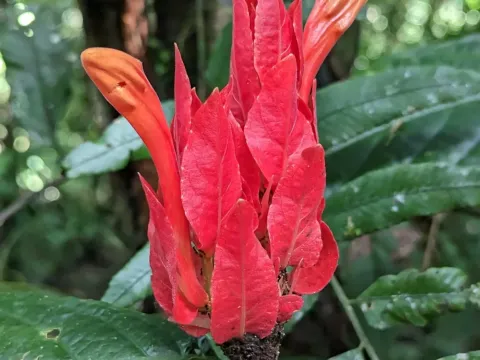
Ruellia chartacea
Ruellia chartacea
Ruellia chartacea is a perennial herbaceous plant classified within the Acanthaceae family. Originating from the tropical regions of South America, this species is well-adapted to humid environments found in rainforest understories.
What the section contains
Ruellia chartacea
The plant features upright stems and large, lance-shaped leaves with prominent venation. A defining characteristic of this species is its unique inflorescence, often shielded by papery bracts, which provides both protection and visual interest to the plant's structure.
Successful cultivation requires bright, filtered sunlight to prevent leaf scorching. In controlled agricultural environments, such as greenhouses, light management is crucial for maintaining the deep color intensity of the foliage and promoting healthy blooming cycles.
The ideal soil profile should be loose, highly porous, and rich in organic matter. A well-draining substrate with a slightly acidic pH level (between 5.5 and 6.5) is essential to facilitate root nutrient uptake and prevent moisture-related stress.
Environmental conditions must mimic tropical habitats, favoring temperatures consistently between 20°C and 28°C. High humidity levels, ideally maintained between 70% and 80%, are vital for preventing leaf desiccation and ensuring robust growth throughout the year.
Common agricultural pests for this species include spider mites and mealybugs, which thrive in low-humidity conditions. Integrated pest management strategies, such as physical removal and systemic treatments, are effective in maintaining crop health.
Root rot, primarily caused by waterlogged soil conditions, remains the most significant threat. Ensuring efficient drainage and avoiding over-irrigation are fundamental practices to prevent the proliferation of water-borne pathogens like Pythium.