
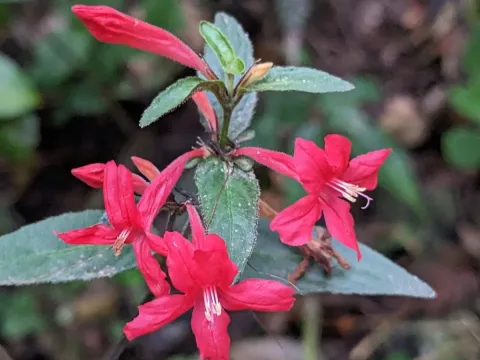
Ruellia coccinea
Ruellia coccinea
Ruellia coccinea is a perennial plant belonging to the Acanthaceae family, native to the tropical regions of South America. It is primarily cultivated as an ornamental plant in greenhouses or as a container crop.
What the section contains
Ruellia coccinea
Propagation is most efficiently achieved through stem cuttings taken in early spring. These cuttings require a warm, humid environment and a well-draining substrate to establish roots successfully.
For seed propagation, sowing should be done in late winter. Seeds require a consistent temperature of around 22–24 degrees Celsius and high humidity to ensure germination within two to three weeks.
When starting from seeds, it is crucial to use a sterile seed-starting mix to prevent the development of damping-off disease, which is a major threat to seedlings.
Once the seedlings develop several sets of true leaves, they should be transplanted into individual pots containing a nutrient-rich, airy soil mixture to promote healthy development.
Ruellia coccinea thrives in bright, indirect light. Direct sunlight, especially during the peak of summer, can cause leaf scorching and reduce the intensity of the flowers' color.
The plant requires consistently moist soil. However, it is vital to avoid waterlogging the roots, as this can quickly lead to root rot in this sensitive tropical species.
A temperature range between 20 and 28 degrees Celsius is ideal for active growth. The plant should be protected from cold drafts, which can cause leaf drop and stunted growth.
Fertilization with a balanced, water-soluble fertilizer is recommended during the growing season to support the formation of its characteristic bright red, tubular flowers.
Maintaining high relative humidity is essential for the health of the plant. Regular misting or the use of pebble trays helps to recreate the tropical conditions needed for optimal growth.
Spider mites are the most common pest affecting Ruellia coccinea, particularly in environments with dry air. They cause yellowing and webbing on the underside of the leaves.
Root rot is a common disease caused by overwatering or poor drainage. It manifests as a wilting of the plant despite the presence of moist soil, indicating damaged roots.
Mealybugs and aphids can also be problematic, often gathering in the leaf axils or on the undersides of the foliage, depleting the plant's resources and inhibiting flowering.
Regular inspections and washing the foliage with mild soap solutions can help keep pest populations under control before they cause significant damage.
Providing adequate ventilation around the plant is an effective cultural practice to prevent fungal issues and ensure the overall vigor of the Ruellia crop.