
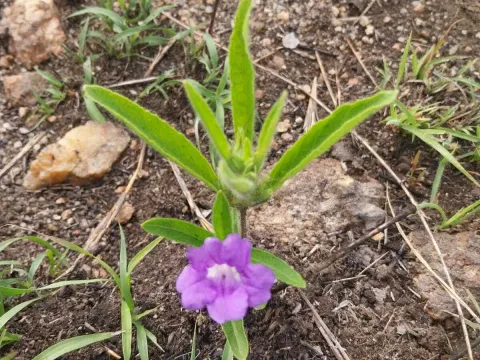
Ruellia geminiflora
Ruellia geminiflora
Ruellia geminiflora is a distinctive member of the Acanthaceae family, native to the tropical landscapes of South and Central America. This species is recognized for its unique botanical structure and reproductive efficiency.
What the section contains
Ruellia geminiflora
Propagation via seeds requires a finely textured, sterile substrate to ensure maximum contact and moisture retention. Sowing should be carried out in early spring to leverage the natural increase in day length.
Maintaining high humidity and stable temperatures near 25 degrees Celsius is crucial during the germination phase. Seeds should be sown on the surface and barely covered to allow light exposure, which aids in the emergence process.
Once seedlings have established sufficient root systems, they can be transplanted into individual containers. It is essential to handle these delicate seedlings with care to avoid root shock.
Vegetative propagation is also a viable option. Cuttings taken from healthy apical stems usually root effectively within two to three weeks under warm and humid conditions.
The plant requires well-draining, nutrient-rich soil with a slightly acidic to neutral pH. Proper aeration of the rooting zone is critical for maintaining overall plant health and preventing root asphyxiation.
Exposure to bright, indirect sunlight is optimal for growth. While the plant can tolerate some morning sun, excessive afternoon heat can cause leaf scorch, necessitating protective measures such as shading.
Consistent moisture is key; the soil should be kept uniformly moist but never waterlogged. Developing a strict irrigation schedule tailored to seasonal evaporation rates is highly recommended.
Temperature management is vital, with a preferred range of 18 to 28 degrees Celsius. The plant should be protected from cold drafts and extreme fluctuations, which can stress the specimen and inhibit flowering.
Fertilization should focus on potassium-rich formulas during the active growing season to support vibrant flower production and maintain foliage density.
Spider mites are the most persistent pest for this species, especially in environments with low relative humidity. Their presence can be identified by fine webbing and stippling on the leaves.
Mealybugs can often be found in the axils of the leaves and stems. Regular inspection and the use of insecticidal soaps or systemic treatments are effective strategies for population management.
Root rot, driven by over-irrigation and poor drainage, remains the most significant physiological threat to the plant. Mitigation involves strictly regulating the water supply and using porous potting mixes.
Fungal leaf spots can occur when foliage remains wet for extended periods, particularly in poorly ventilated greenhouse settings. Improving airflow is a primary prevention method.
Whiteflies may occasionally infest the foliage in dense plantings. Integrating biological controls or rotating effective chemical agents is advised for sustained crop health.