
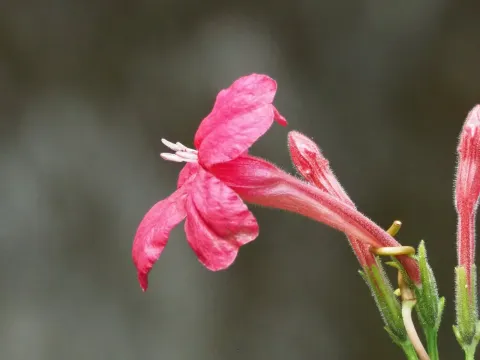
Ruellia elegans
Ruellia elegans
Ruellia elegans is a perennial herbaceous plant belonging to the Acanthaceae family. Originating from the tropical regions of South America, this species naturally inhabits forest understories, thriving in environments characterized by dappled sunlight and consistently high humidity levels.
What the section contains
Ruellia elegans
Botanically, the plant is recognized by its pubescent stems and vibrant, deep-green ovate leaves. The primary horticultural appeal of this species lies in its tubular, crimson-red flowers, which bloom profusely when provided with optimal growing conditions throughout the season.
For successful cultivation, the plant requires a light, well-draining substrate rich in organic matter. Maintaining a neutral to slightly acidic soil pH is essential, as this balance facilitates the efficient uptake of nutrients and prevents the accumulation of mineral salts that could harm the roots.
Temperature management is critical for the healthy development of Ruellia elegans. The plant prefers a stable thermal environment between 20 and 25 degrees Celsius. Exposure to temperatures consistently below 15 degrees Celsius significantly suppresses vegetative growth and can lead to long-term physiological stress.
Maintaining high atmospheric humidity is an essential cultural requirement. Because the species originates from tropical habitats, it benefits from regular misting or automated humidity control systems. It is important to avoid waterlogging the soil while ensuring the substrate remains evenly moist to support continuous growth.
The primary pests affecting Ruellia elegans include spider mites, whiteflies, and mealybugs. These infestations are most prevalent in low-humidity environments, where the pests can multiply rapidly, necessitating regular scouting and appropriate integrated pest management strategies.
Fungal diseases, including root rot and powdery mildew, pose the most significant health risks to the crop. These conditions are typically caused by poor drainage, excessive irrigation, or insufficient air circulation around the canopy, which encourages the proliferation of soil-borne pathogens.