
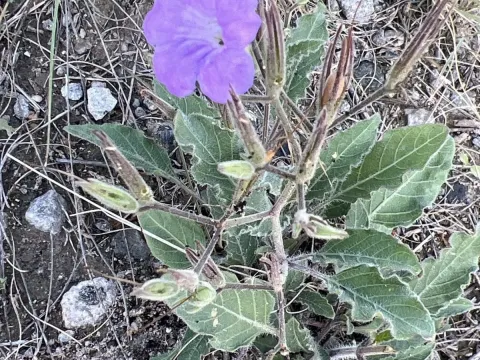
Ruellia drushelii
Ruellia drushelii
Ruellia drushelii is a distinctive herbaceous perennial plant belonging to the Acanthaceae family. This species is recognized for its botanical interest and its contribution to tropical-themed ornamental horticulture.
What the section contains
Ruellia drushelii
Originating from South America, the species thrives in humid tropical and subtropical environments. Its natural habitat includes woodland margins and semi-shaded areas where the soil remains consistently moist but not waterlogged.
Climatic requirements are strict: the plant is highly sensitive to cold temperatures and cannot survive frost. Successful cultivation requires a greenhouse or indoor setting where temperatures can be maintained between 20°C and 28°C throughout the growing season.
The soil profile should be rich in organic matter, loose, and possess high drainage capacity. A mix comprising peat, pine bark, and perlite is often utilized to ensure sufficient aeration for the roots, preventing hypoxia.
Regarding agrotechnical practices, regular hydration is essential, yet the substrate must be allowed to dry slightly at the top layer between watering cycles. Balanced liquid fertilizers should be applied sparingly during the growth phase to support foliage and potential flowering.
The primary threats to Ruellia drushelii involve fungal pathogens resulting from excessive humidity combined with poor airflow. Root rot remains the most common issue, often caused by stagnant water in the root zone.
Pests that frequently infest this species include spider mites and whiteflies. These insects are attracted to the soft leaf tissue, particularly in environments with low humidity, where they can cause significant damage to the plant's aesthetic value.
Integrated pest management strategies are recommended, focusing on maintaining optimal humidity levels and physical removal of infected parts. Biological controls or targeted acaricides can be used for persistent spider mite outbreaks.
Maintaining a clean cultivation area is crucial for disease prevention. Removing debris and ensuring adequate spacing between individual plants helps reduce the likelihood of spreading fungal spores and insect populations.
Consistent monitoring of the leaf undersides allows for early detection of potential outbreaks. Proactive management and adherence to precise irrigation schedules are the most effective ways to preserve the plant's health and vigor.