
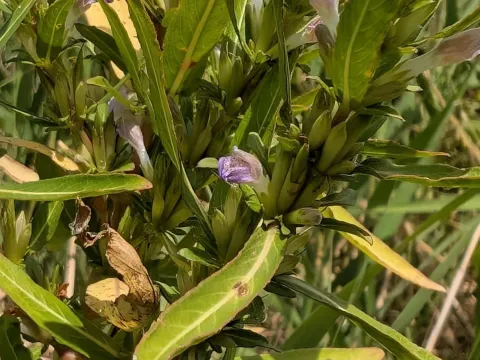
Hygrophila ringens
Hygrophila ringens
Hygrophila ringens is a herbaceous perennial plant belonging to the Acanthaceae family. It is native to tropical regions of Asia, primarily found in India, China, and across Southeast Asia, where it thrives in diverse wetland habitats.
What the section contains
Hygrophila ringens
The plant is naturally adapted to riparian zones, marshes, and paddy field margins. Successful cultivation requires a warm, humid environment that mimics these natural conditions, ensuring consistent moisture levels throughout the growing season.
Soil requirements involve nutrient-rich, moisture-retentive substrates with a neutral to slightly acidic pH. While the species is highly moisture-loving, it requires adequate aeration within the root zone to prevent the onset of anaerobic conditions.
Morphologically, the plant presents with upright or decumbent stems and lanceolate, opposite leaves. It produces small, tubular flowers, typical of the Acanthaceae family, often arranged in axillary inflorescences which provide a distinctive aesthetic appeal.
In terms of хозяйственное (economic) utilization, it is predominantly used in aquascaping and ornamental horticulture for paludariums. Some traditional practices also acknowledge its use in local herbal applications, highlighting the importance of secondary metabolites in its structure.
Common pests affecting Hygrophila ringens include spider mites and aphids, which are particularly problematic in greenhouse settings with low air circulation. These pests extract sap, causing stunted growth and yellowing of the foliage.
Disease management focuses on preventing fungal pathogens such as root rot and leaf spots. These infections are typically triggered by environmental stress, poor drainage, or overcrowding, necessitating improved sanitation and climate control measures.