
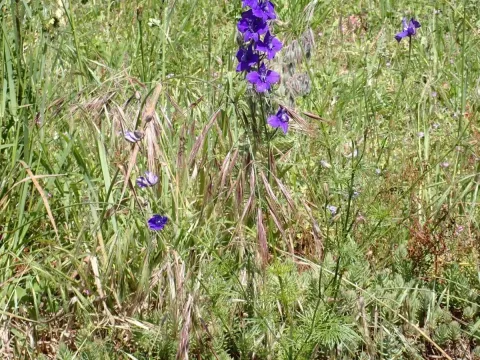
Dwarf Larkspur
Delphinium nanum
Dwarf Larkspur (Delphinium nanum) is a member of the Ranunculaceae family. This low-growing plant is highly valued for its compact habit, making it an excellent choice for rock gardens and borders.
What the section contains
Dwarf Larkspur
Seeds are best sown in late autumn for natural stratification or in early spring indoors. Cold treatment for about 2–3 weeks significantly improves germination rates and ensures uniform development of seedlings.
Use a light, well-draining seed-starting mix. Cover seeds very lightly with a thin layer of fine substrate, as they need a bit of indirect light to germinate effectively.
During the spring germination phase, keep the soil moist but not waterlogged. Maintain temperatures between 12 and 15 degrees Celsius to encourage healthy root establishment.
Once seedlings have developed at least two true leaves, they can be transplanted into larger pots or their permanent garden location, spaced approximately 20 centimeters apart to allow for proper airflow.
Dwarf Larkspur thrives in sunny locations but can tolerate partial shade in areas with high summer heat. Consistent exposure to sunlight is crucial for maintaining the plant's compact form and vibrant bloom.
The soil should be fertile, neutral to slightly alkaline, and well-draining. Heavy, clay-based soils should be amended with organic matter and sand to prevent root rot caused by standing water.
The plant requires regular watering during the active growing season, especially before and during the flowering period. Avoid overhead irrigation to minimize the risk of foliar diseases.
Annual feeding with balanced fertilizers in early spring and again after the first wave of blooms helps the plant recover and potentially produce a second, albeit smaller, flush of flowers.
Maintenance includes light pruning of spent flower stalks. This practice not only keeps the plant looking tidy but also prevents it from expending energy on seed production, redirecting it to root development.
Powdery mildew is a common issue for this species, especially in humid conditions with poor air circulation. Improving spacing between plants is the most effective preventative measure.
Slugs and snails are the most prominent pests, often feeding on young, tender growth in spring. Physical barriers like crushed eggshells or copper tape can help protect the plants.
Delphinium aphids and larvae can damage buds, leading to stunted growth. Regular inspections and the application of insecticidal soaps or neem oil are recommended upon the first sign of infestation.
Root rot is often the result of excessive moisture or poor drainage. Ensure that the planting site has sufficient drainage and avoid excessive mulching directly against the base of the stem.
Botrytis blight may occur during cool, damp spells. To manage this, remove and destroy any infected foliage immediately to prevent the spread of fungal spores to healthy parts of the plant.