
Decarya
Decarya
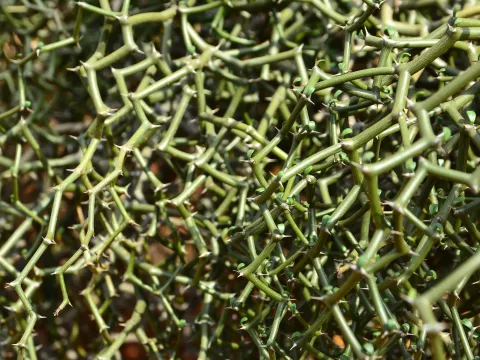
Decarya (Decarya madagascariensis) is a unique succulent shrub belonging to the Didiereaceae family. Native to the island of Madagascar, this plant has evolved to thrive in arid tropical environments characterized by intense heat and sporadic rainfall.
What the section contains

Decarya
The plant is botanically distinguished by its unique zigzagging branches, which are covered in sharp thorns. These thorns are evolutionary adaptations that serve to protect the plant from herbivores while also shading the stems to reduce excessive evaporation of stored moisture.
Successful cultivation requires extremely bright, direct light. In professional greenhouse settings, Decarya should be positioned to receive maximum sun exposure to maintain its structural integrity and prevent etiolation, which often compromises the health of the plant.
The growing medium must be highly porous and well-draining. A professional-grade substrate for this species usually includes a mixture of coarse sand, perlite, and a small portion of mineral-rich soil, ensuring that water passes through quickly to prevent root asphyxiation.
Climate management is crucial for this species. During the active growth phase, temperatures should range between 20°C and 30°C. In the dormancy period, it is essential to lower temperatures and completely cease watering to simulate the natural dry season of its origin.
The primary threat to the health of Decarya is root rot, triggered by inadequate drainage or overwatering. Once rot settles into the succulent tissues, it can spread rapidly, making early detection and immediate reduction of soil moisture vital for plant survival.
Pest issues frequently include infestations of mealybugs, which congregate around the sharp spines and in the crotches of the branches. These insects sap the plant's vitality and create entry points for secondary infections or fungal pathogens.
Spider mites are another significant concern, particularly in greenhouse environments with low humidity and poor air circulation. Infestations are marked by fine webbing and yellowing patches on the stems, indicating cell damage.
Integrated pest management involves the use of systemic insecticides specifically labeled for succulent plants. It is highly recommended to perform periodic inspections of the stem architecture to catch any pest clusters before they reach a stage that requires aggressive treatment.
Environmental control remains the most effective defense against diseases. By ensuring constant air movement around the plant and maintaining strict water management protocols, the likelihood of fungal or bacterial pathogen establishment is significantly reduced.