
Decarya madagascariensis
Decarya madagascariensis
Description
Growing requirements
Decarya madagascariensis is a distinct species of succulent shrub belonging to the Didiereaceae family. It is endemic to the arid zones of southern Madagascar, where it thrives in harsh, desert-like conditions.
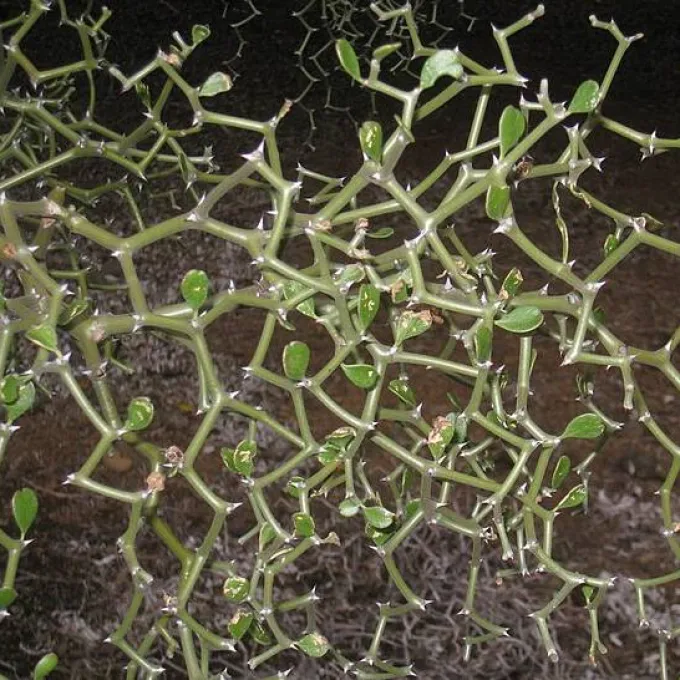
The plant is characterized by its remarkable zigzag stem pattern and sharp spines that provide protection against local fauna. It is a deciduous species that sheds leaves during dry periods to conserve energy and moisture.
For successful cultivation, this plant requires high intensity light and a very well-draining substrate. A mix of sand, pumice, and minimal organic matter is essential to mimic its native rocky, nutrient-poor soil environment.
Temperature management is critical: the plant requires warmth during the active growing season and a cool, dry dormant period during winter. Water should be strictly withheld during winter to prevent physiological stress.
Economically and horticulturally, this species is highly prized by collectors of rare succulents and xerophytic plants. It is commonly displayed in specialized greenhouses and botanical gardens rather than large-scale agriculture.
Main diseases and pests
Root rot is the primary threat to the vitality of the plant, almost always caused by improper watering practices or heavy, water-retaining soil mixes.
Mealybugs are common pests that tend to hide within the dense network of spines, making manual control and treatment difficult for the gardener.
Spider mites can become a problem in low-humidity environments, causing stippling and scarring on the delicate epidermis of the zigzagging branches.
Fungal infections can spread rapidly if the air circulation around the plant is stagnant, especially during the humid summer months.
Proper hygiene, such as removing fallen leaves and checking for pests under the spines, is essential to maintain the health of this slow-growing specimen.