
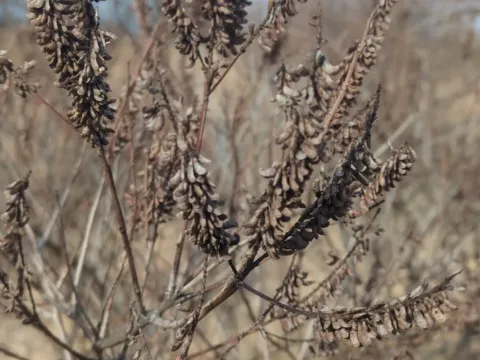
Amorpha croceolanata
Amorpha croceolanata
Seeds of Amorpha croceolanata are primarily sown in spring, once soil temperatures reach 10-12 degrees Celsius. Preliminary stratification for 30-45 days is highly recommended to improve germination rates.
What the section contains
Amorpha croceolanata
Seed planting depth should be 2-3 centimeters in light soils and up to 1.5 centimeters in heavier loams. It is critical to ensure consistent moisture levels in the first weeks following germination.
For vegetative propagation, cuttings are harvested at the end of the active growing season. They should be placed in prepared cold frames with loose substrate, protected from direct exposure to intense sunlight.
The crop exhibits slow initial root system development. During the first year after planting, it is essential to minimize competition from weeds by regularly performing manual weeding in the root zone.
The optimal planting pattern for creating hedges involves spacing plants between 0.7 and 1 meter apart. This ensures sufficient nutrient access for each specimen in subsequent years.
Amorpha croceolanata belongs to the Fabaceae family and is a deciduous shrub characterized by high ecological plasticity. The plant prefers well-lit areas, as development slows down significantly in shaded conditions.
The culture adapts well to various soil types, including dry sandy and rocky terrains. A crucial requirement is the absence of high water tables, as waterlogging is detrimental to the plant's root system.
The shrub possesses high drought resistance, attributed to its botanical features. Specific pubescence (hairy covering) on the shoots and leaves helps the plant retain moisture and reduce transpiration during hot summer months.
In regions with severe winters, the plant may suffer from frost damage but exhibits good regenerative capacity. For the first two years after planting, young saplings require protective mulch around the base.
Agronomic maintenance includes annual sanitary pruning in early spring. Removing dry or damaged branches stimulates new growth and helps maintain the shrub's ornamental appearance over many years.
The economic use of this culture is aimed not at commodity seed production, but at biomass generation and supporting pollination. The flowers of Amorpha are a valuable source of nectar for pollinators.
As a phytoremediation crop, Amorpha croceolanata helps stabilize slopes thanks to its deep, branched root system. This makes it an ideal candidate for erosion control on sandy and degraded soils.
Plantings of this shrub species can improve soil structure by enriching it with nitrogen through symbiosis with nitrogen-fixing bacteria, making it a promising component for agroforestry systems.
When grown as a hedge, productivity is assessed by crown density and vertical growth. The plant can reach heights of up to 2 meters, effectively functioning as a windbreak for adjacent fields.
Nectar yield productivity depends on planting density and weather conditions during the flowering period. Under favorable climates, Amorpha provides a vital resource for apiaries located near its cultivation sites.
The main threats to the plant's health are fungal diseases that develop under high humidity. Leaf spots are frequently observed and require timely application of appropriate fungicides.
Pests such as leaf beetles and aphids may attack young foliage during periods of active sap flow. Regular monitoring is recommended to detect and manage potential infestations at an early stage.
Powdery mildew can affect shrubs in overly dense plantings where air circulation is restricted. Preventive measures include crown thinning and prompt removal of diseased plant debris.
Root rot may occur due to excessive irrigation or planting in heavy clay soils. To manage these pathogens, it is important to strictly follow watering schedules and enhance soil drainage.
It is critically important to maintain phytosanitary standards on the site, as weeds often act as reservoirs for viral and bacterial infections that can be dangerous to leguminous species.