
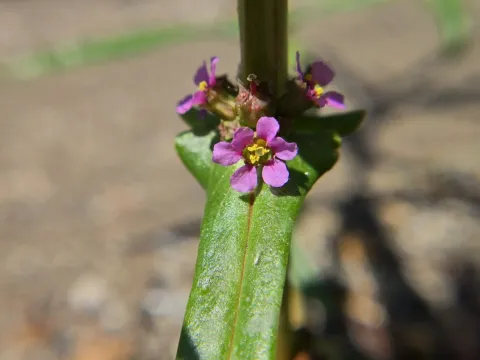
Ammannia teres
Ammannia teres
Ammannia teres is an herbaceous plant species belonging to the Lythraceae family. It is typically found in tropical and subtropical regions, favoring wet environments, riverbanks, and agricultural wetlands, including rice paddies.
What the section contains
Ammannia teres
The botanical structure of the plant features an upright stem with opposite, lanceolate leaves. It is highly adapted to aquatic or semi-aquatic life, with physiological processes geared towards high moisture availability and efficient nutrient uptake through the root system.
Climate requirements for Ammannia teres demand consistent warmth, ideally between 22 and 28 degrees Celsius. The plant requires significant light exposure to maintain its growth rate and prevent etiolation, which is a common issue in lower light conditions.
The soil or substrate must be nutrient-rich, preferably silty or clay-based, with a slightly acidic to neutral pH level. Proper drainage or water flow is essential to prevent the accumulation of stagnant substances around the roots, which could lead to decay.
In terms of agricultural and horticultural use, this plant is predominantly cultivated for ornamental purposes in aquascaping and pond landscaping. It requires regular maintenance, including pruning to encourage lateral branching and ensure the health of submerged tissues.
Common pests affecting Ammannia teres include aphids and spider mites, particularly when the surrounding air or water conditions fluctuate or lack sufficient humidity. These pests tend to target the tender shoots and apical meristems.
Fungal infections, such as powdery mildew, often occur in dense plantings where air circulation is restricted. These conditions promote spore germination, which can quickly spread across the foliage, damaging the structural integrity of the leaves.
Root rot is another significant threat, usually caused by poor substrate oxygenation or over-fertilization. The decline of the root system often presents as yellowing leaves and an overall reduction in growth vigor, eventually leading to plant collapse.
Effective management involves monitoring and early intervention. If a pest infestation is detected, physical removal or localized bio-control is preferred over synthetic chemical treatments, to which this species is notably sensitive.
Disease prevention relies heavily on maintaining a stable environment. Regular water changes, balanced fertilization protocols, and ensuring adequate light levels are the best methods to boost the plant's natural immunity against common environmental pathogens.