
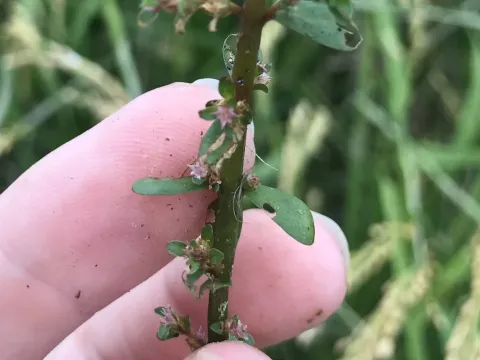
Ammannia peploides
Ammannia peploides
Ammannia peploides belongs to the Lythraceae family. It is a moisture-loving herbaceous plant widely recognized for its adaptation to marshy habitats and wetlands across tropical and subtropical zones.
What the section contains
Ammannia peploides
The botanical structure is characterized by smooth, erect, or spreading stems with lanceolate leaves arranged oppositely. The flowers are typically inconspicuous and axillary, facilitating successful reproduction in humid environments.
Native to regions in Asia and Australia, this plant is frequently observed in rice paddy fields, where it acts as a weed. It thrives in regions with consistent rainfall and high thermal indices throughout the year.
Cultivation requires specific soil conditions, primarily saturated soils or shallow standing water. The substrate should be rich in organic content to support the plant's high metabolic rate during its active growing season.
Light intensity plays a crucial role in the development of Ammannia peploides. It is an obligate heliophyte, meaning it requires intense sunlight to maintain its structural integrity and reproductive capacity.
Major threats include various fungal infections, particularly root rot, which typically occur when the water circulation is poor or the water becomes stagnant for extended periods.
Pests such as leaf-eating caterpillars and aphids pose a significant risk to the foliage. These infestations can rapidly defoliate the plant, leading to significant yield losses in managed environments.
Water quality degradation, including high concentrations of heavy metals or sudden shifts in chemical composition, can severely damage the plant's health and reduce its growth velocity.
Pathogen spread is exacerbated by overcrowding. If the density of the plants is too high, the lack of air movement promotes the growth of mold and mildew on the stems and leaves.
Agricultural management must prioritize weed control strategies, as other invasive aquatic plants can easily outcompete Ammannia peploides for space and nutrients in a controlled environment.