
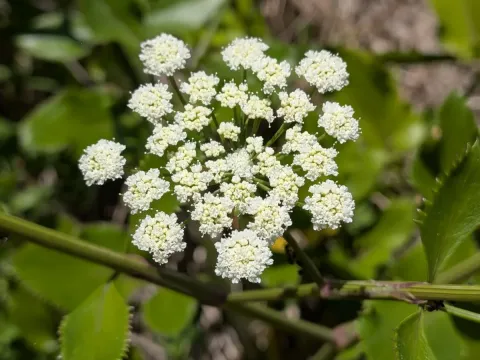
Ammi seubertianum
Ammi seubertianum
Sowing Ammi seubertianum requires careful attention to timing, typically taking place in early spring after the frost threat has completely passed.
What the section contains
Ammi seubertianum
The seeds are relatively small and should be sown at a shallow depth of approximately 1 centimeter to ensure they receive enough warmth and light to germinate effectively.
Row spacing is vital for the development of these plants; maintaining a distance of 45 to 50 centimeters allows the canopy to develop without excessive competition.
For large-scale cultivation, precision seed drills are recommended to maintain uniform density and optimize the usage of the high-value seeds.
Adequate soil moisture must be maintained immediately after sowing, using a fine mist irrigation system to prevent the soil surface from crusting over the seeds.
As a member of the Apiaceae family, Ammi seubertianum thrives best in temperate climates with a preference for well-drained, fertile, and light-textured soils.
The crop requires full sun exposure to maintain its structural integrity and encourage the production of its characteristic dense, umbrella-shaped inflorescences.
Soil pH levels should ideally be maintained between 6.0 and 7.5, which facilitates optimal nutrient uptake throughout the plant's growth cycle.
Watering requirements are moderate; however, consistent moisture is necessary during the vegetative phase to prevent premature bolting or stunted growth.
Providing a steady supply of nitrogen and potassium during the initial growth stages will significantly improve the plant's overall vigor and yield potential.
The primary threats to the health of the crop include soil-borne fungal pathogens which often proliferate if the soil remains waterlogged for extended periods.
Insects like aphids and spider mites can cause damage by feeding on foliage, necessitating a regular monitoring schedule to implement timely interventions.
- Powdery mildew management through ventilation.
- Aphid control using biological or systemic solutions.
- Weed suppression in early growth stages.
Cultural practices such as removing infected debris and maintaining proper plant spacing are the most effective ways to mitigate disease outbreaks in the field.
Integrating biological pest control agents can help maintain a balanced ecosystem, reducing the need for broad-spectrum pesticides that might harm beneficial pollinators.