
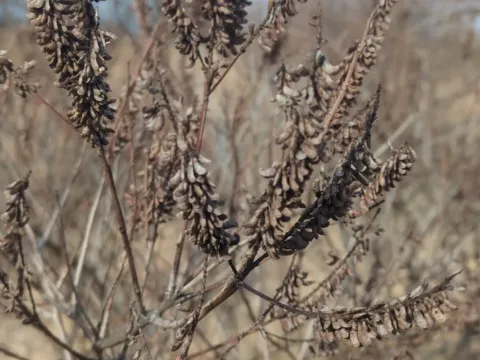
Amorpha virgata
Amorpha virgata
Amorpha virgata is a perennial deciduous shrub belonging to the Fabaceae family. Originating from North America, it has adapted well to various climatic zones, making it a reliable choice for environmental protection and apiculture projects.
What the section contains
Amorpha virgata
The crop is highly adaptable to soil quality. It thrives in poor, sandy, or stony soils and exhibits significant salt tolerance, allowing it to grow in areas where other ornamental or agricultural plants might struggle to survive.
Amorpha virgata is a heliophilous species, meaning it requires full sun exposure to maintain its health and bloom potential. While it can survive in partial shade, its growth rate and flowering frequency decrease significantly compared to sunny locations.
The shrub is notable for its exceptional drought tolerance. Once established, it can withstand prolonged dry spells, making it ideal for low-maintenance landscaping and field protection belts in arid regions.
Agrotechnical maintenance is minimal and revolves around proper spacing and periodic pruning to ensure vigorous growth. Propagation is easily achieved through seeds, cuttings, or the use of root suckers, which sprout readily from the parent plant.
The primary agricultural value of Amorpha virgata lies in its role as a honey plant. During the summer months, it provides a consistent nectar source for bees, contributing significantly to the productivity of local apiaries.
The plant is widely used in soil erosion control programs. Its dense root system is highly effective at stabilizing slopes, banks, and loose sandy soils, serving as a biological barrier against water and wind erosion.
In landscaping and ornamental gardening, the shrub is prized for its attractive pinnate leaves and spikes of violet flowers. It is commonly planted in thickets or as a living fence to improve the aesthetics of agricultural sites.
Amorpha virgata is an nitrogen-fixing plant. By entering into symbiosis with rhizobia bacteria, it enriches the soil with nitrogen, making it a useful companion plant for rehabilitating exhausted agricultural soils.
Although currently not a major industrial crop, research into the plant's essential oils and chemical composition continues, suggesting future potential in the pharmaceutical or cosmetic extract markets.
Amorpha virgata possesses a robust natural immunity, making it largely resistant to most common plant pathogens. This resistance is a key advantage for farmers looking to minimize chemical usage in their fields.
Pest pressure is generally very low. While aphids may occasionally appear during extreme summer heat, they rarely cause sufficient damage to warrant chemical intervention, as natural predators typically control the population.
Root rot is the main threat associated with improper site selection. Poorly drained, waterlogged soils can create an environment conducive to fungal growth, which is why proper site preparation is critical for longevity.
Mechanical damage to the bark or branches can serve as an entry point for opportunistic infections. It is advised to use sharp, clean tools during pruning to promote rapid healing and prevent disease transmission between plants.
Routine inspection during the early growing season is sufficient to maintain plant health. Removing dead or damaged tissue and ensuring adequate spacing for airflow are the only necessary preventive measures.