
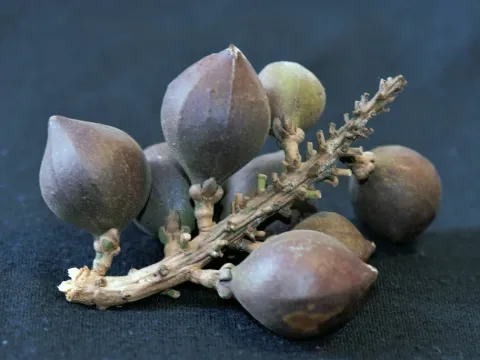
Paullinia yoco
Paullinia yoco
Paullinia yoco is an evergreen woody vine belonging to the Sapindaceae family. This unique plant is native to the humid tropical forests of the Amazon basin, primarily distributed across Colombia, Ecuador, and Peru.
What the section contains
Paullinia yoco
Successful cultivation requires a humid tropical climate with consistent rainfall throughout the year. The optimal growth temperature ranges from 22 to 28 degrees Celsius, as the plant is highly sensitive to frost and sudden temperature fluctuations.
Soil requirements involve deep, well-drained, and fertile soils with a slightly acidic to neutral pH range of 5.0 to 6.5. The crop thrives in areas protected from strong, desiccating winds and requires high ambient humidity to flourish.
Agricultural management of Paullinia yoco involves the provision of sturdy trellises or supports, as the species is a climber. Propagation is typically achieved through seeds, although vegetative propagation via stem cuttings is possible to maintain the specific traits of the parent stock.
The economic value of the plant lies primarily in the high caffeine content found within its stem bark. Indigenous populations have historically processed the bark to create stimulating infusions that suppress hunger and enhance physical endurance during long journeys through the dense jungle.
Harvesting the bark is a delicate task that necessitates precision to avoid damaging the main vines, ensuring the long-term viability and regrowth of the plant. Traditionally, collection is performed on mature specimens that have reached at least 5 to 7 years of age.