
Deinbollia
Deinbollia
Deinbollia is a genus of flowering plants belonging to the soapberry family, Sapindaceae. These plants typically grow as shrubs or small understory trees in tropical forests, showing high adaptation to low-light and high-humidity environments.
What the section contains


Deinbollia
The origin of the genus is primarily the African continent and the island of Madagascar. They thrive in regions with consistent warmth and high rainfall, making them unsuitable for temperate outdoor agriculture without highly controlled greenhouse environments.
Soil requirements for these plants include well-draining, nutrient-rich substrates. They are highly sensitive to root asphyxiation, which can occur in compacted or waterlogged soils; thus, organic-rich soil mixes with excellent porosity are recommended for healthy growth.
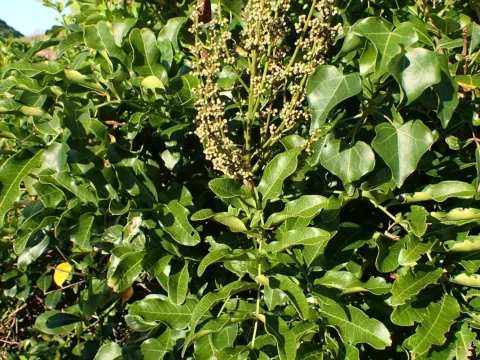
Botanically, Deinbollia is characterized by alternate, often compound leaves and small flowers arranged in dense terminal or axillary panicles. The fruit is typically a fleshy berry, which plays a crucial role in the local ecosystem by providing a food source for seed-dispersing fauna.
The economic and agricultural utility of Deinbollia is largely focused on ethnomedicine and ornamental landscaping. Local communities utilize various parts of these plants in traditional remedies, while their aesthetic growth habit makes them attractive candidates for botanical gardens and specialized landscaping projects.