
Deinbollia pinnata
Deinbollia pinnata
Description
Growing requirements
Deinbollia pinnata is a woody plant belonging to the Sapindaceae family. It is native to the tropical forest regions of West Africa, where it thrives in shaded and humid environments.
The plant requires fertile, well-draining soil rich in organic matter to maintain healthy growth. Waterlogging must be strictly avoided, as the roots are prone to decay under excessive moisture.
Climate requirements involve consistent warmth and high atmospheric humidity. As a tropical species, Deinbollia pinnata is extremely sensitive to cold temperatures and cannot survive any frost, necessitating greenhouse conditions in non-tropical regions.
Agricultural management includes regular fertilization during the active growing season to support its vigorous development. Mulching is recommended to retain moisture in the soil surface while protecting the shallow root system.
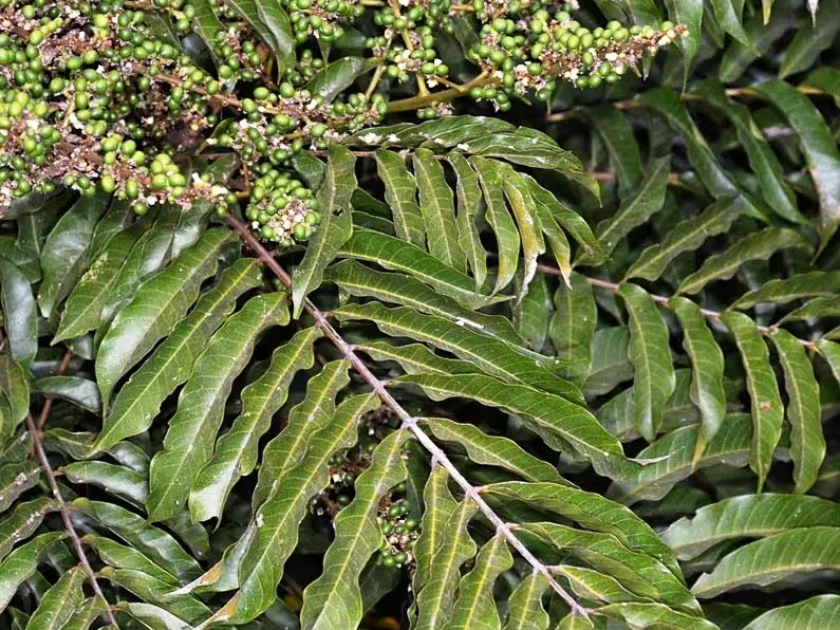
Botanically, the plant is recognized by its distinct pinnate leaves, which provide a lush, ornamental appearance. Propagation is typically performed through seeds sown in a warm, humid environment with controlled lighting.
Harvesting
The economic use of Deinbollia pinnata is primarily directed toward decorative landscaping and the horticultural trade in tropical and subtropical regions.
While not a major commercial staple crop, it holds value in local ethnobotany and specialized research nurseries focusing on rare tropical flora.
Seed harvesting is conducted when the fruit capsules transition into their mature phase. Careful timing is required to prevent the dispersal of seeds before they can be collected.
Manual labor is necessary for the harvest, as the delicate nature of the plant and its specific habitat requirements do not currently support industrial-scale harvesting techniques.
Post-harvest handling involves cleaning the seeds and storing them in conditions that maintain vitality, as the seeds of this species generally have a relatively short shelf life if improperly stored.