
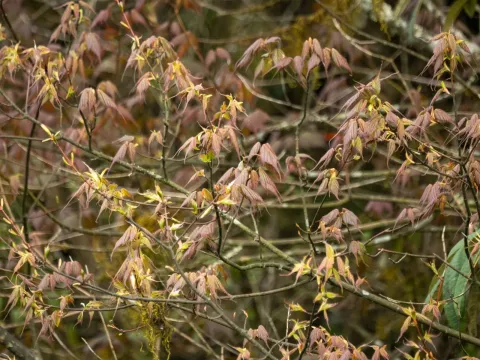
Norway maple
Acer acuminatum
Sowing seeds of the Norway maple is best performed in late autumn, allowing the seeds to undergo natural stratification within the soil during the winter season.
What the section contains
Norway maple
If sowing is planned for spring, seeds must be stratified in a refrigerator at temperatures between 1 and 5 degrees Celsius for approximately three to four months to ensure successful germination.
The seeds should be planted at a depth of 2 to 3 centimeters in a nutrient-rich, well-draining soil medium to facilitate optimal sprout development.
Row spacing should be maintained at about 20–30 centimeters to allow for efficient weeding, moisture control, and the application of fertilizers during the growing season.
Consistent soil moisture is essential during the germination phase, as dry conditions can significantly hinder the emergence of young seedlings in the nursery environment.
The Norway maple is a member of the Sapindaceae family and prefers fertile, moist, and well-drained soils with a slightly acidic to neutral pH balance.
While tolerant of various soil conditions, it thrives best in deep, loamy soils where root systems can expand fully without encountering compacted layers.
This tree is well-adapted to temperate climates, showing significant hardiness, though it requires protection from harsh, drying winds during its early growth years.
Regular maintenance includes loosening the soil around the base and applying organic mulch, which helps to retain soil moisture and regulate soil temperature.
Adequate sunlight is required for the plant to achieve its characteristic crown shape, although it shows moderate shade tolerance in its juvenile development stage.
The economic utility of the Norway maple is primarily focused on timber production, as the wood is valued for its hardness, light color, and fine texture.
In forest management, the yield is measured by the volume and quality of timber harvested at maturity, suitable for furniture, flooring, and musical instruments.
The tree serves as an excellent nectar source, significantly contributing to the honey production of nearby apiaries during the early spring flowering period.
Landscape use provides high value in urban planning, where the tree is utilized for noise reduction, shade provision, and the improvement of urban air quality.
The cultivation of this species also supports biodiversity, as it provides nesting sites and habitat for a variety of birds and beneficial insect species.
Fungal diseases like powdery mildew and various leaf spots are frequent threats, especially in areas with high humidity and poor air circulation among young trees.
Pests such as aphids and wood-boring beetles can cause significant damage, particularly when trees are under stress from environmental factors or physical injury.
Verticillium wilt is a serious vascular disease that can lead to rapid decline and death, necessitating careful site selection and the avoidance of contaminated soils.
Effective management requires integrated pest management strategies, including the removal of infected wood and the use of preventative treatments when necessary.
- Periodic monitoring for signs of infestation.
- Removal of dead branches to improve airflow.
- Application of fungicides during high-risk seasons.
Timber harvesting is conducted once the trees reach physical and technical maturity, ensuring the wood meets the required density and grain standards.
Seed harvesting is performed during autumn when the samaras turn brownish, indicating that the seeds have reached physiological maturity for further propagation.
For nursery production, lifting seedlings is best accomplished during the dormant season, ensuring a significant portion of the root system is preserved.
Proper logging practices are essential to minimize soil compaction and damage to the surrounding ecosystem during the extraction of mature timber.
Post-harvest handling of logs requires immediate processing or proper storage to prevent rot, insect damage, and drying cracks before final manufacturing.