
Balfour pine
Pinus balfouriana
Description
Growing requirements
The Balfour pine (Pinus balfouriana) belongs to the Pinaceae family and is an iconic conifer native to the high-elevation regions of California. It is highly valued for its exceptional longevity and aesthetic resilience.
This species naturally occupies alpine and subalpine zones, thriving in rocky, nutrient-poor, and highly drained soils. It is well-adapted to survive extreme seasonal temperature fluctuations and persistent mountain winds.
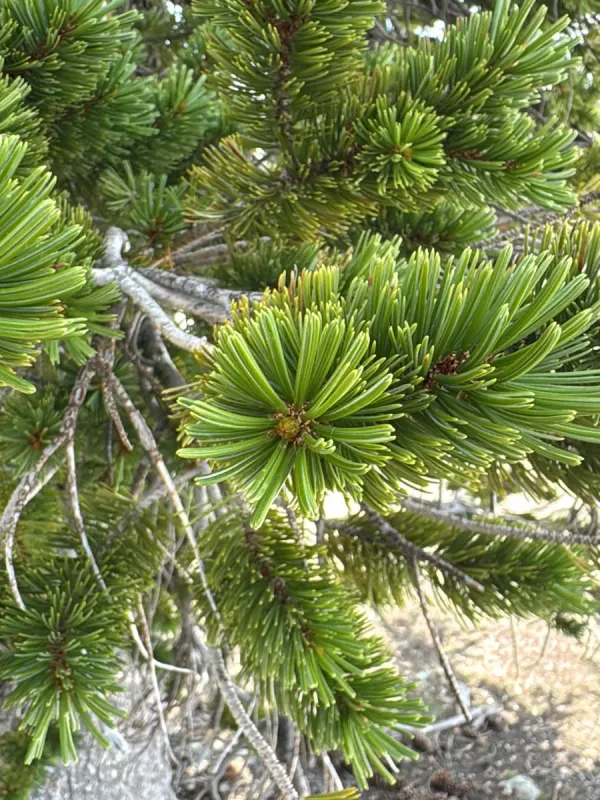
Botanically, the tree is characterized by its five-needle clusters and thick, dark green foliage. The cones are distinct, featuring long, prickly scales that turn a deep purplish-brown color as they mature.
In terms of cultivation, the Balfour pine requires specific conditions that mimic its wild habitat. Excellent drainage is non-negotiable; therefore, rocky or sandy substrates are preferred over heavy, water-retentive clay soils.
Growth is remarkably slow, often spanning centuries in the wild. When planted in controlled environments, it demands full sun exposure and minimal soil nitrogen levels to maintain its natural, compact growth form.
Main diseases and pests
The species faces significant challenges from various fungal pathogens, particularly in nurseries where air circulation might be insufficient.
Needle cast diseases are common threats that can significantly reduce the tree's photosynthetic capacity if not monitored regularly.
Bark beetles and other wood-boring insects represent a major risk, especially when the trees are under stress from environmental factors.
Root rot is the most frequent cause of failure in cultivation, typically triggered by soil waterlogging and lack of oxygen in the root zone.
Climate warming poses a long-term threat to the natural range of the species, as it is strictly adapted to cool, high-altitude climates and has limited plasticity.