
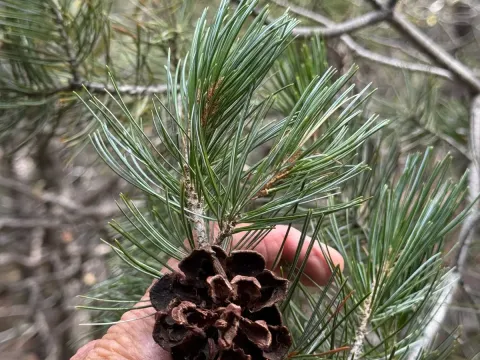
Border pinyon
Pinus discolor
The Border pinyon (Pinus discolor) is a coniferous tree belonging to the Pinaceae family. Native to the mountain ranges of southeastern Arizona, southwestern New Mexico, and parts of northern Mexico, it is a key species in the arid woodland ecosystems of the region.
What the section contains
Border pinyon
This species thrives in rocky, well-drained soils found on high-elevation slopes. It requires a specific balance of climatic conditions characterized by abundant sunlight and low humidity, making it highly sensitive to poorly drained or excessively wet environments.
The tree exhibits slow growth and a distinct botanical structure, with needles typically found in bundles of three. Its ability to extract moisture from arid soil profiles makes it a resilient inhabitant of environments where other species fail to compete.
In terms of agricultural and forestry practices, the Border pinyon is valued for its nutritional role as a source of edible pine nuts. Sustainable harvesting of these seeds is essential for maintaining local biodiversity and economic interest in the species.
Planting efforts focus on replicating the natural habitat conditions. Successful establishment of the crop relies on minimal irrigation once the root system has been adapted to the native soil structure of the planting site.
The primary threats to Pinus discolor are fungal pathogens, particularly root rot, which often emerge when the trees are planted in sites with excessive moisture or poor aeration. Proper site selection is the best defensive strategy.
Pests such as bark beetles and engraver beetles represent a constant risk, especially during prolonged drought periods when trees are under significant physiological stress. Infested trees must be managed quickly to prevent the spread of the insect population.
Wildfires remain a catastrophic threat to the population of this species. Young trees are particularly susceptible to fire damage, which can devastate entire groves and hinder natural regeneration processes for many years.
Anthropogenic pressure, including over-collection of seeds and habitat fragmentation, significantly impacts the health of the species. Sustainable management plans are necessary to ensure the preservation of the population.
Climate change poses a long-term risk to the Border pinyon. Shifts in precipitation patterns may alter the moisture availability, pushing the species beyond its physiological tolerance and leading to increased mortality in wild populations.