
Bhutan pine
Pinus bhutanica
Description
Growing requirements
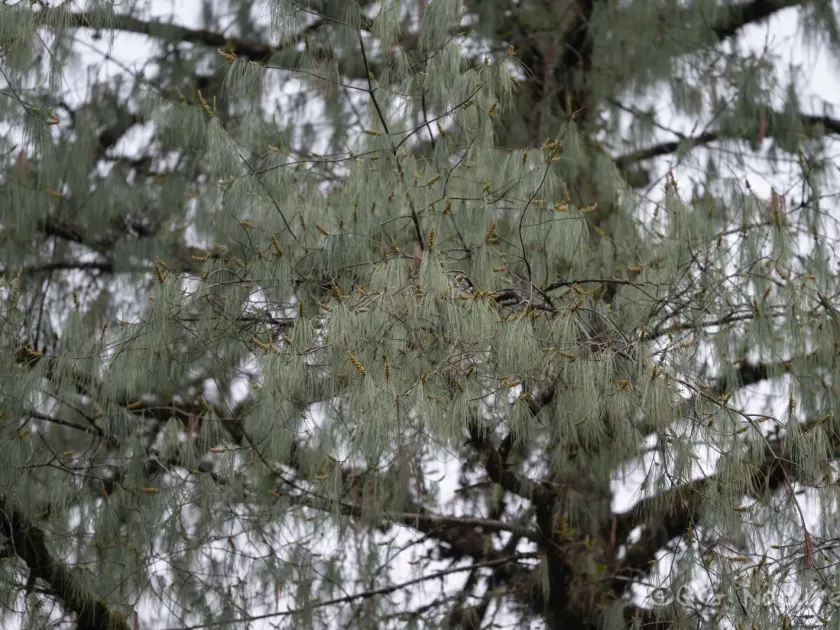
The Bhutan pine (Pinus bhutanica) belongs to the Pinaceae family. It is a tall evergreen conifer, renowned for its graceful, pendulous needles and significant aesthetic appeal in its native mountain ranges.
The species is indigenous to the eastern Himalayas, including Bhutan, parts of India, and China. It thrives in high-altitude environments, typically growing between 1700 and 2700 meters above sea level.
Regarding cultivation requirements, this pine prefers cool, moist climates with well-drained, acidic to neutral soils. It is sensitive to soil compaction and waterlogging, which can severely hinder root development.
Botanically, it is distinguished by its long needles arranged in fascicles of five and relatively large, cylindrical cones. The tree maintains a conical shape when young, becoming more spreading and irregular as it reaches maturity.
In economic and landscaping contexts, it is primarily used for reforestation in high-mountain zones and as a collector's tree in arboreta, prized for its unique foliage and distinct presence in temperate garden landscapes.
Main diseases and pests
The primary threats to this species include fungal needle diseases, which often manifest in areas with poor airflow and high humidity. Proper site selection and spacing are critical to mitigating these risks.
Common pests such as aphids and wood-boring beetles may target stressed or weakened trees. Regular monitoring is essential to ensure that any infestation is addressed before it reaches critical levels.
Young plants are particularly vulnerable to browsing mammals and rodents. Using protective barriers around the trunks can effectively prevent damage to the bark during the winter months.
Nutrient deficiencies, particularly in rocky or highly leached soils, can stunt growth. Periodic soil analysis and the application of balanced organic fertilizers can support sustained health.
Climate instability, particularly rapid fluctuations in moisture levels, can lead to physiological stress, making the tree more susceptible to secondary infections and environmental damage.