
Umbrella bush
Melaleuca cardiophylla
Description
Growing requirements
The Umbrella bush (Melaleuca cardiophylla) is a resilient woody shrub belonging to the Myrtaceae family. It is endemic to the sandy and limestone plains of Western Australia, reflecting its natural adaptation to harsh conditions.
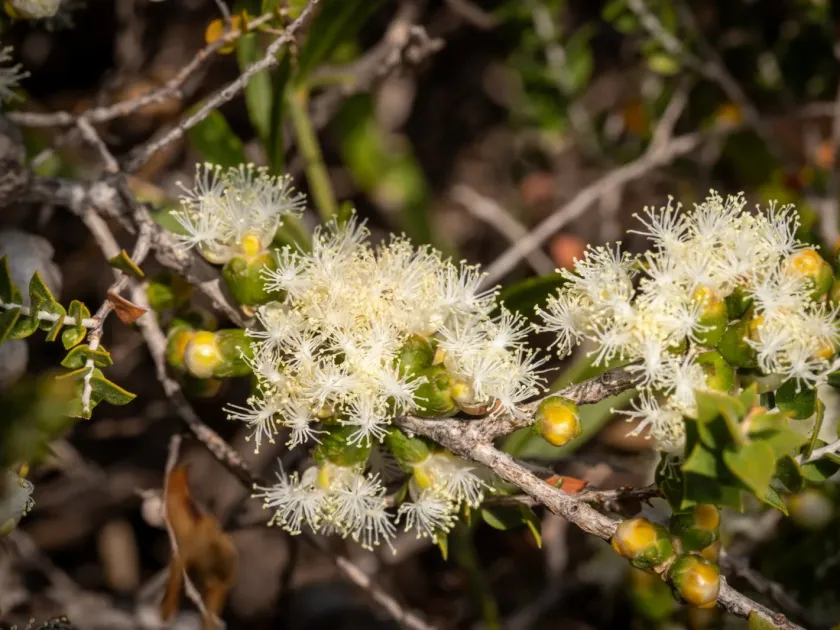
Botanically, it is recognized by its small, heart-shaped leaves and dense foliage that provides excellent structural interest. The bark often exhibits a papery or fibrous texture, a classic trait within the Melaleuca genus.
Climatically, the species thrives in sunny, open environments with moderate to warm temperatures. It is highly valued for its exceptional drought tolerance once the root system has become fully established in the landscape.
Regarding soil requirements, this plant prefers well-draining soils and is notably tolerant of alkaline or limestone-based ground. While it survives in low-nutrient soils, an occasional application of balanced fertilizer can enhance blooming.
The primary use of Melaleuca cardiophylla is ornamental. It is widely used by landscapers for hedging, screening, and as a backdrop for xeriscaping projects due to its year-round decorative foliage and nectar-rich flowers.
Main diseases and pests
The most common issues for this plant include root rot, particularly in poorly drained clay soils. Ensuring adequate drainage is the most critical factor in maintaining plant health.
Pest threats are generally minimal; however, scale insects and aphids may occasionally infest new growth. Integrated pest management, including the use of horticultural oils, is usually sufficient to address such infestations.