
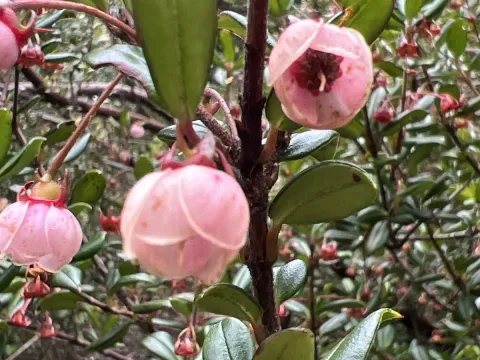
Ugni
Ugni
Propagation of Ugni (Ugni molinae) is most commonly performed through seed sowing or stem cuttings. Seeds should be sown in a light, well-draining substrate in early spring, ensuring a stable temperature of approximately 20-22 degrees Celsius.
What the section contains

Ugni
Cuttings are generally preferred as they allow for faster maturation and preserve the specific characteristics of the parent plant. Semi-hardwood cuttings are taken in late summer and rooted in greenhouses with high humidity levels.
Successful seed germination requires a period of stratification to mimic natural dormant conditions. Seedlings emerge quite slowly, necessitating consistent soil moisture without waterlogging, which is critical for young plants during their development stage.
When transplanting to a permanent location, it is essential to avoid planting too deep to prevent collar rot. Seedlings thrive best when placed in locations sheltered from strong winds and provided with adequate sunlight.
In the first years, young plants require winter protection if temperatures drop below critical levels, making the species only partially suitable for open-field cultivation in regions with harsh winters.
Ugni belongs to the Myrtaceae family and is an evergreen shrub native to Chile. The plant thrives in well-draining, slightly acidic to neutral soils that are rich in organic matter.
The culture is highly sensitive to air humidity, performing poorly in arid conditions or excessively dry indoor environments. The optimal placement is in partial shade or bright, indirect light, as harsh direct sun can scorch the leaves.
Watering must be regular and moderate, preferably using soft, room-temperature water. It is vital to avoid waterlogging the soil, as the root system is highly susceptible to hypoxia and rot.
During the active growing season, the plant requires periodic fertilization with complex mineral fertilizers low in lime, as Ugni does not tolerate alkaline substrates well.
Winter hardiness is limited; the plant can withstand short frosts down to -7 to -10 degrees Celsius, which is why in cooler latitudes, it is often grown as a container plant and moved to a cool, frost-free room for the winter.
The yield of Ugni is directly dependent on light conditions and the age of the bush. Under favorable conditions, the plant begins to bear fruit within 2-3 years, producing small, reddish-pink berries with a powerful, strawberry-like aroma.
Ugni fruits are highly valued in culinary applications for their unique flavor profile, which resembles a blend of strawberry, apple, and guava. They are commonly used for jams, jellies, juices, and consumed fresh.
The productivity of one mature bush can reach several kilograms of berries per season. Regular pruning stimulates lateral branching and promotes the formation of more fruit buds on the tips of the shoots.
Yield metrics are significantly higher for plants grown in mild subtropical climates, where the shrub can reach two meters in height and form a dense, productive canopy.
When cultivated in containers, the yield is lower; however, proper maintenance and annual repotting allow for stable fruit production over many years, making Ugni a valuable ornamental and fruit-bearing plant.
The primary pests for Ugni in confined or indoor conditions are spider mites and scale insects, which reproduce rapidly if humidity levels are not managed. Systemic acaricides and insecticides are effective for control.
Root rot poses the greatest threat when watering is excessive or drainage is insufficient. Ensuring the surface of the soil dries out slightly between waterings and utilizing a high-porosity substrate helps mitigate this risk.
Leaf chlorosis often appears due to the use of hard water with high calcium content or an overly high soil pH. Regular monitoring of substrate acidity is essential to prevent this metabolic disturbance.
Fungal diseases, such as powdery mildew, may affect the shrub if air circulation is inadequate. Preventive fungicide treatments and maintaining sufficient spacing between plants significantly reduce infection risks.
In its native environment, Ugni is relatively resilient; however, when agricultural practices are neglected, the plant's immunity decreases, making it vulnerable to secondary infections entering through micro-abrasions in the tissues.
Harvesting Ugni berries is done selectively as they ripen. Mature berries turn a characteristic deep pink or purple hue and become soft to the touch, detaching easily from the stem.
Since the berries do not have a long shelf life, it is recommended to process or consume them within a few days of harvest to preserve their unique sensory qualities and aroma.
The ripening period of the berries is extended over time, allowing for a gradual harvest spanning several weeks. This is convenient for small gardens but requires regular monitoring of the bushes as the season concludes.
During harvest, it is important to handle the bush gently to avoid damaging brittle stems. Using garden shears can simplify the process if the berries are tightly clustered, although they usually detach easily by hand.
Storing the harvested crop in a cool place slows down spoilage, though due to high sugar and moisture concentrations, the berries are prone to quick fermentation at room temperature.