
Scaly-bark honey-myrtle
Melaleuca squamea
Melaleuca squamea, commonly known as the Scaly-bark honey-myrtle, belongs to the Myrtaceae family and is native to the temperate and damp regions of Tasmania and Victoria, Australia.
What the section contains
Scaly-bark honey-myrtle
The plant thrives in moist, acidic soils and is typically found in nature inhabiting heathlands, swamps, and the edges of water bodies where it receives consistent water supply.
For horticultural success, it requires a position in full sun to partial shade, sheltered from harsh winds, and needs soil that mimics its native boggy environment without becoming stagnant.
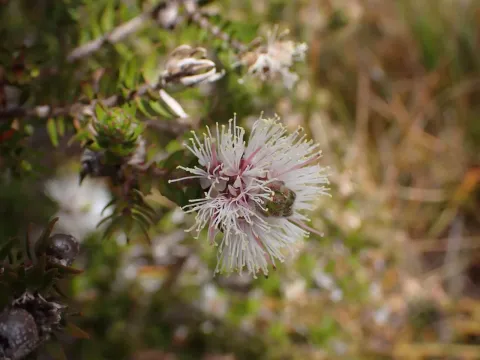
Botanically, it is recognized by its small, scaly leaves and showy, spherical to cylindrical flower spikes that range in color from mauve to pink, creating a striking appearance during the flowering season.
In landscaping, this species is valued for its compact growth habit and its ability to withstand wet soil conditions that would be lethal to many other ornamental shrub species.
Root rot remains the most significant threat to Melaleuca squamea, often exacerbated by poor drainage and excessive heat during the summer months, leading to rapid decay of the vascular system.
Pests such as scale insects and mealybugs can pose issues for the foliage, particularly when the plant is stressed by environmental factors or grown in poorly ventilated conditions.
Iron chlorosis is frequently observed when the soil pH is too high; as a calcifuge plant, it requires specific acidity levels to maintain healthy nutrient absorption and leaf greenness.
Frost damage can affect young plants or those in exposed sites; therefore, ensuring winter protection or selecting a suitable microclimate is essential for long-term health.
Effective management includes regular monitoring for pests and ensuring that the irrigation water does not have a high mineral content, which could alter soil composition over time.