
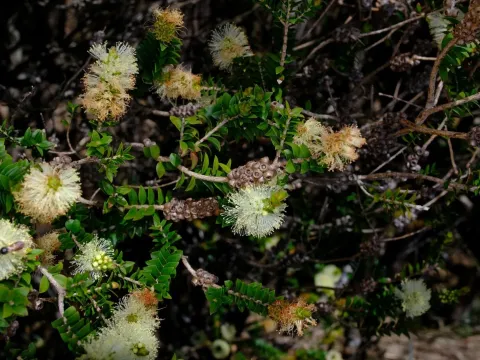
Scented paperbark
Melaleuca squarrosa
Melaleuca squarrosa, commonly known as the scented paperbark, is a member of the Myrtaceae family. It is a dense, evergreen shrub or small tree, notable for its distinct foliage and fluffy, yellow-white flowers that emerge along the stems.
What the section contains
Scented paperbark
Native to south-eastern Australia, the plant naturally thrives in wet heaths, swamps, and riparian zones. This adaptation makes it a highly resilient species in wetlands, where it contributes to ecosystem stability and supports local biodiversity.
For successful cultivation, the species requires full sun to partial shade and consistently moist, acidic soils. It is well-suited for rain gardens or areas with poor drainage where other ornamental plants might struggle due to waterlogging.
Maintenance involves providing adequate water throughout the growing season, especially for young specimens. Although it is quite hardy once established, it benefits from moderate pruning after flowering to encourage dense growth and maintain its desired shape.
The plant is highly valued for its aromatic leaves and potential essential oil production. Beyond its commercial applications, it serves as a robust ornamental choice for landscaping in temperate to subtropical climates, functioning effectively as a screening plant.
The primary threats to Melaleuca squarrosa include soil-borne pathogens, such as Phytophthora species, which can cause severe root damage. Proper site selection and ensuring good soil health are essential to prevent the spread of these pathogens.
Insects like scale insects and spider mites can occasionally affect the foliage, particularly when the plant is kept under stressed conditions. Integrated pest management strategies, such as physical removal or appropriate horticultural oils, are effective for control.