
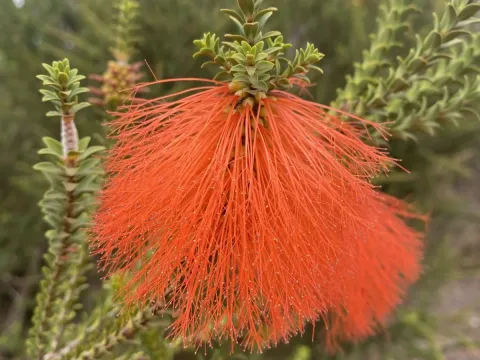
Sparse-leaved melaleuca
Melaleuca sparsa
The sparse-leaved melaleuca (Melaleuca sparsa) is a member of the Myrtaceae family. Native to Western Australia, it is an evergreen shrub adapted to dry, well-draining soil conditions typical of its natural habitat.
What the section contains
Sparse-leaved melaleuca
This species thrives in Mediterranean and subtropical climates. It requires significant exposure to direct sunlight to ensure healthy development and to support its characteristic flowering cycles throughout the year.
The soil requirements focus on excellent drainage. A gritty, sandy, or loamy soil mix with a slightly acidic to neutral pH is ideal. Heavy, clay-based soils that retain moisture for too long are generally unsuitable for this plant.
Cultivation practices involve a regular but cautious watering schedule. While young plants need consistent moisture to establish their root systems, mature specimens exhibit high drought tolerance, making them suitable for water-wise landscaping.
In ornamental horticulture, the species is highly valued for its aesthetic form and unique foliage. It is frequently incorporated into landscape designs as a feature shrub or grown in containers in regions where the climate is too cold for outdoor survival.
The most significant threats to the plant's health are fungal infections associated with root rot. These occur primarily due to poor drainage and waterlogged conditions, which damage the delicate root system.
Common pests affecting this species include spider mites, mealybugs, and scale insects. Regular inspection is necessary, especially when plants are housed in indoor environments or greenhouses where air circulation is restricted.
Light deficiency is a major issue for container-grown plants. When light levels are too low, the shrub becomes sparse and leggy, losing the dense foliage that is essential for its ornamental appeal.
Maintaining proper air circulation is critical for preventing outbreaks of pests and diseases. If an infection is detected, affected branches should be pruned away to stop further spread.
Nutrient deficiencies or improper pH levels can manifest as chlorosis on the leaves. Providing a balanced, slow-release fertilizer during the growing season helps sustain the plant’s vigor and health.