
Poulsenia
Poulsenia
Poulsenia is a genus of flowering plants categorized under the family Moraceae. The most prominent species, Poulsenia armata, is recognized for its robust physical structure and is natively found within the Neotropical realm, spanning from Mexico to the Amazon Basin.
What the section contains

Poulsenia
This tropical tree thrives in lowland rainforest environments. It requires consistent rainfall and high humidity, which are essential for its vigorous growth cycle and the maintenance of its large, dense canopy throughout the year.
Regarding edaphic requirements, Poulsenia favors deep, fertile soils with efficient drainage. It often occupies niches within the tropical forest where it can compete for light, gradually becoming a significant component of the local arboreal strata.
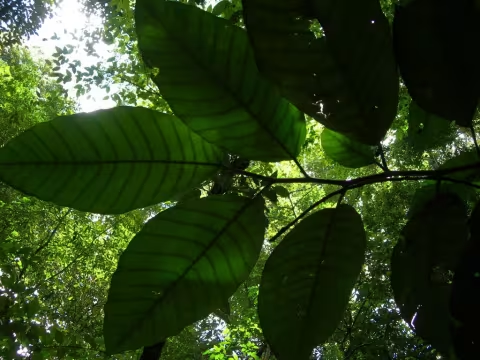
Botanically, the plant is characterized by its armament of spines on the trunk and younger branches, which serves as a defensive mechanism against herbivores. The tree produces a milky sap, common in many species of the fig family, and features foliage adapted to high humidity.
Economically, while not a mainstream commercial crop, the timber of Poulsenia is utilized locally for construction purposes. Historically, indigenous populations have extracted fibers from the bark to produce ropes and other durable woven materials, showcasing its utility in traditional craftsmanship.