
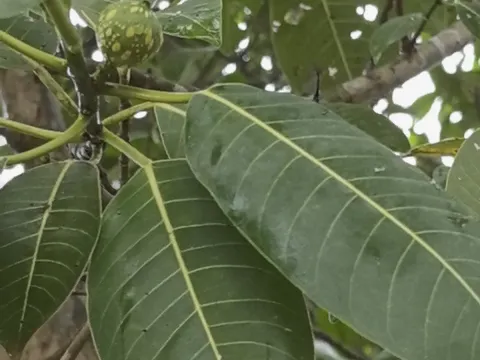
Ficus insipida
Ficus insipida
Ficus insipida, belonging to the Moraceae family, is a massive evergreen tree species native to the tropical regions of Central and South America. It is characterized by its significant height and the development of large buttress roots.
What the section contains
Ficus insipida
The species thrives in humid tropical environments, typically found along riverbanks and in flood-prone forests where rainfall is abundant throughout the year.
Environmental requirements include a consistent tropical temperature regime with no tolerance for frost. It prefers deep, nutrient-rich soils with excellent drainage properties to support its vigorous root system.
Sunlight is essential for the tree's health, though young saplings may benefit from partial shade during their early establishment phase to prevent excessive moisture loss.
Agronomic management involves maintaining soil moisture levels and ensuring that space is provided for the tree to expand its crown and root system fully without competing with other large canopy species.
The primary economic output of Ficus insipida is its latex, which is harvested from the bark. This sap has traditional applications in medicine and artisanal craft manufacturing within its native range.
Wood production is an secondary use, with the timber being utilized for specific construction purposes after proper drying to prevent warping and degradation common in tropical timbers.
Ecologically, the tree is a vital source of fruit, contributing to biodiversity by providing a steady food source for local fauna, which is a critical aspect of tropical ecosystem restoration.
In agroforestry systems, the tree provides shade for smaller, sensitive crops, helping to regulate the local microclimate of the farm or plantation area.
Yield management requires expert harvesting techniques to ensure the longevity of the trees while extracting the desired plant extracts or timber efficiently.
The species is susceptible to various fungal pathogens that flourish in high-humidity tropical conditions, often attacking the root systems or stem tissues through wounds.
Insect pests, such as wood-boring beetles, pose a major threat by weakening the structural integrity of the trunks and facilitating the entry of secondary diseases.
Root rot is the most serious threat, often caused by waterlogging in poorly drained soils, leading to rapid decline in the health of both young and mature trees.
Integrated pest management strategies focusing on sanitation and maintaining tree spacing are highly recommended to minimize the incidence of common agricultural diseases.
Preventative care, including the avoidance of physical damage to the bark during harvest, is essential to protect the tree from opportunistic fungal and bacterial infections.