
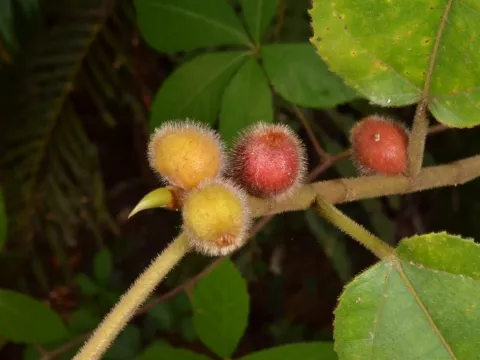
Ficus hirta
Ficus hirta
Sowing Ficus hirta seeds is best performed in early spring when daylight hours start to increase significantly. March or April provides the ideal natural light levels required for the successful germination and initial development of young seedlings in the early stages of growth.
What the section contains
Ficus hirta
The seeds should be planted in a light, well-draining substrate composed primarily of peat and coarse sand. Maintaining a constant temperature between 22 and 25 degrees Celsius is crucial during the germination phase to ensure a high and uniform success rate for sprouting.
Since the seeds are light-dependent for germination, they must be sown superficially, with only a very thin layer of substrate or no covering at all. Placing the containers under clear film helps maintain high humidity levels, which is vital for the development of delicate seedlings.
In nursery environments, vegetative propagation through cuttings is a standard and efficient practice. Cuttings are harvested from active growth, treated with rooting hormones, and placed in high-humidity propagation chambers to promote rapid root development.
Once seedlings have developed their first set of true leaves, they should be transplanted into individual pots. This process must be handled with extreme care to avoid damaging the fragile root system, which could otherwise delay the plant's growth for several weeks.
Ficus hirta belongs to the Moraceae family and is recognized as a hardy, evergreen shrub or small tree. Originating from the humid forests of East and Southeast Asia, the species is well-adapted to tropical and subtropical climates characterized by high moisture levels.
The plant thrives in bright, indirect sunlight. While it can tolerate partial shade, it requires sufficient light for optimal foliage development and the accumulation of secondary metabolites within its tissues, which are often sought after for their medicinal value.
A fertile, slightly acidic soil with an excellent drainage system is necessary to prevent root rot. The species is highly sensitive to waterlogged conditions, making well-aerated soil structures essential for the health and longevity of the plant in a field or pot setting.
Climate management is critical, as Ficus hirta prefers temperatures between 18 and 28 degrees Celsius. While it can withstand mild fluctuations, it is not frost-tolerant, and extreme cold exposure can lead to physiological stress or total failure of the crop.
Regular but controlled irrigation is required, ensuring the soil remains evenly moist without becoming soggy. Balanced NPK fertilizers applied during the peak growing season help support the plant's vigor and promote the rapid biomass growth needed for harvesting.
The primary economic value of Ficus hirta lies in its use as a source of medicinal raw materials. Its roots and leaves are extensively utilized in traditional herbal practices, making the quality of the harvested biomass a key factor in its commercial success.
Yield efficiency depends largely on the age of the plants and the adherence to proper agronomic practices. Typically, the first significant harvest of roots and leaves is initiated when plants reach three to four years of age to ensure maturity.
The total yield of green biomass is significantly boosted by regular pruning and maintenance. By encouraging the development of lateral shoots, growers can increase the overall volume of foliage available for harvesting while maintaining the plant's structural integrity.
Economic performance is further optimized through proper plant spacing, which ensures that each specimen receives adequate air circulation and nutrient availability. Proper field management allows for a predictable and sustainable output of high-quality medicinal material.
Consistent market standards for this species require the final product to be uniform and free from contaminants. Processing techniques and post-harvest handling are essential to preserve the active biological ingredients that make Ficus hirta valuable.
Common pests, including spider mites and scale insects, pose the most significant threat to Ficus hirta cultivation. These pests thrive in dry environments and can quickly infest entire plantings, leading to leaf drop and stunted growth if not managed promptly.
Mealybugs are another frequent issue, attacking tender shoots and leaf axils. The cotton-like substance they produce is a clear indicator of infestation, and if ignored, they can severely weaken the plant by extracting essential nutrients from the sap.
Fungal diseases, primarily related to root rot and leaf spot, occur predominantly in conditions of excessive soil moisture and poor ventilation. Symptoms include yellowing leaves and darkened, mushy stem bases, which can be fatal if the infection spreads.
Effective pest management relies on a combination of cultural practices, such as maintaining optimal humidity and ventilation, and the judicious use of systemic insecticides. Integrated pest management (IPM) strategies are highly recommended for this crop.
Maintaining high sanitary standards by removing plant debris and cleaning tools regularly helps prevent the spread of pathogens. These preventative measures are fundamental to ensuring a long-lasting and healthy crop cycle for Ficus hirta.
Harvesting Ficus hirta must be conducted with precision to ensure maximum yield while protecting the longevity of the plant. Root extraction requires careful digging to minimize damage to the main root system, ensuring that the plant can potentially recover.
Leaf harvesting is best performed in the morning hours to take advantage of the peak moisture content in the foliage. This timing ensures the best quality and preserves the integrity of the chemical compounds found within the leaves.
Drying is the most critical post-harvest step for Ficus hirta. Using forced-air drying chambers at controlled temperatures of 40–45 degrees Celsius effectively removes moisture while preventing the degradation of valuable biological compounds.
Finished raw material should be stored in airtight, moisture-proof, and dark containers. This approach prevents mold growth and preserves the potency and aromatic quality of the medicinal material over extended storage periods.
Quality control during and after harvest includes meticulous sorting to remove any soil, debris, or damaged plant material. Standardizing this process is essential to meet the regulatory and pharmaceutical requirements of the medicinal market.