
Ficus ingens
Ficus ingens
Description
Growing requirements
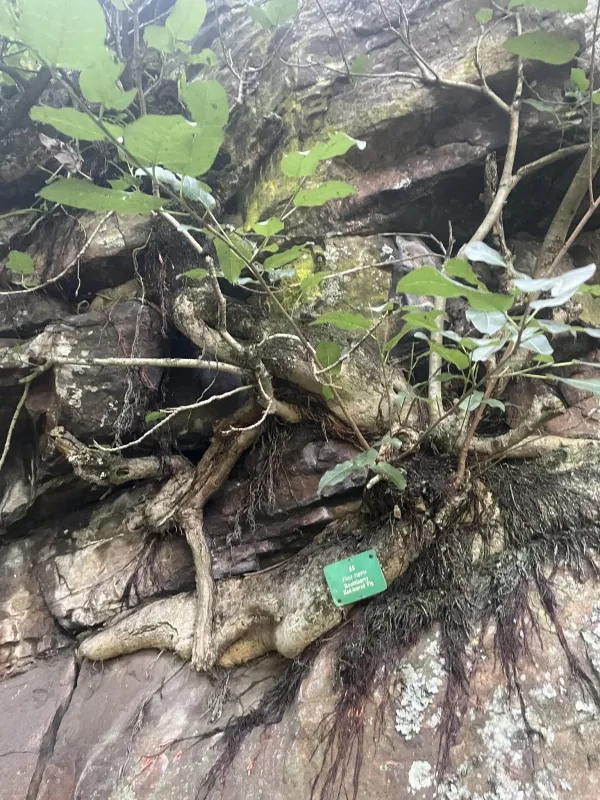
Ficus ingens, commonly known as the Red-leaved Rock Fig, belongs to the Moraceae family. This species is a large tree that often starts its lifecycle as a hemiepiphyte, anchoring itself in rock crevices or on other trees before its roots reach the ground.
The native range of this tree spans across sub-Saharan Africa. It is well-adapted to rocky outcrops, cliffs, and open woodland areas, demonstrating a high degree of resilience to environmental stresses and fluctuating moisture levels in its natural habitat.
Regarding climate, Ficus ingens requires warm conditions. It is strictly sensitive to frost and thrives in tropical or subtropical zones where temperatures remain consistently above freezing. Exposure to cold can lead to severe tissue damage or death.
Soil requirements are relatively flexible, though the species excels in well-draining, rocky, or sandy loam soils. It is highly efficient at extracting nutrients from poor quality substrates, making it a hardy choice for specific reforestation projects.
Agronomic management involves ensuring ample sunlight, which is critical for the development of its characteristic red-tinted young leaves. Adequate space must be provided for root expansion, as the tree develops a wide and powerful root system.
Main diseases and pests
Key pests include scale insects and spider mites, which can proliferate rapidly in dry conditions. Integrated pest management strategies, such as the application of neem oil or targeted insecticides, are effective in controlling these outbreaks.
Fungal pathogens causing leaf spot may occur if the foliage remains moist or if aeration is insufficient. Maintaining a dry canopy and ensuring proper spacing between plants are essential cultural practices to mitigate fungal risks.
Root rot, driven by excessive water retention in the soil, remains the most significant threat to the survival of this species in containerized cultivation. Ensuring a high-quality drainage layer is a fundamental prerequisite for long-term health.
Mechanical injuries resulting from improper maintenance can introduce various bacterial and viral pathogens. All tools used for trimming should be thoroughly sanitized between plants to prevent the spread of systemic diseases.
In natural settings, the tree may be subject to herbivory by specialized insects, but these are typically balanced by natural predators. Monitoring for symptoms of infestation is necessary to prevent premature defoliation of the tree.
Harvesting
The economic utility of Ficus ingens is primarily centered on ornamental and ecological landscaping. Due to its drought tolerance, it is frequently utilized in urban planning within hot climates to provide shade and reduce soil erosion.
In agroforestry systems, the tree acts as a keystone species. Its fruit, produced in large quantities, serves as a vital food source for a variety of avian and mammalian species, thereby promoting biodiversity within the managed landscape.
While the wood is not generally utilized for timber production due to its poor durability and structural qualities, indigenous communities have historically utilized various plant parts for medicinal purposes, often involving bark infusions.
Propagation is generally achieved through seeds, which require specific conditions for germination. Seed harvesting should take place during peak ripeness to ensure viability, followed by immediate planting or storage in climate-controlled environments.
Formative pruning is recommended to maintain a manageable structure, especially in semi-controlled environments like large conservatories or botanical gardens. This practice helps prevent storm damage and ensures a healthy crown structure.